Pe
Peiris, Henry (?- 1959)
Party pseudonym: Jayasinghe
Became active in left movement in Ceylon in 1920s under influence of A.E. Goonesinghe. Founding member Lanka Sama Samaja Party, 1935. Editor, Samasamajaya, 1936-1940. One of the party’s most fluent Sinhala writers. Worked in LSSP underground party during WWII. Member of Parliament, 1947-52 (Panadura). Delegate to Bolshevik Leninist Party of India convention, 1948. Split from LSSP, October 1953, joined Philip Gunawardena’s VLSSP. Later joined the Sri Lanka Freedom Party. Worked for the Lake House newspapers. Deputy Editor, Dinamina .
Compiled by Charles Wesley Ervin
Peirce, Charles Sanders (1839-1914)
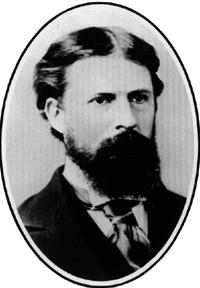 American scientist, logician, and founder of American Pragmatism; the first US writer to gain international recognition as a philosopher, Peirce criticised what he regarded as the ‘metaphysics’ which dominated European thinking, while endeavouring to construct his own system to rival that of Immanuel Kant.
After spending a year with the U.S. Coast and Geodetic Survey, Peirce graduated from Harvard in chemistry in 1863 and rejoined the Survey to make observations of lunar occultations, and continued with astronomical work until 1878.
In connection with a survey aiming to determine more precisely the Earth’s ellipticity, Peirce developed a method of fixing the length of the metre in terms of a wavelength of light, gaining him international recognition. The Survey however, was dissatisfied with his work for them and Peirce resigned in 1891, never enjoying regular employment for the remainder of his life. Peirce however went on to gain a formidable reputation in logic, for which he is most renowned, and made significant contributions in a stunningly wide range of sciences and technology. He also gave occasional lectures in philosophy at John Hopkins University and frequently addressed the National Academy of Sciences and other learned institutions.
Peirce regarded Logic as identified with semiotics (or Semiology), the theory of signs. However, Peirce was never satisfied with his own system of views and endlessly subjected his formulations to amendment and change (a personality trait which may explain why the Survey found him a unsatisfactory employee!). He wanted to achieve an integral view of formal deduction, the ‘logic’ of scientific progress, induction and what he called “abduction” – the formulation of new concepts which explain observed facts in a surprising way (like “lateral thinking”), and integrate acts directed at understanding or communicating with actions which actually do something.
Peirce’s Pragmatism was first elaborated in a series of Illustrations of the Logic of Science in the Popular Science Monthly in 1877-78 including How to Make Our Ideas Clear in 1878. In this article, Peirce argues that beliefs, including scientific beliefs, are essentially habits of action.
Peirce's character is brought in his own view that his most important contribution to philosophy, was his revision of Kant’s a priori categories forms of the understanding, which he reduced from 12 to 3: Quality, Relation, and Representation - concepts which he endeavoured to use to structure all his writings, as part of his endless drive to formulate an integral, logical structure for science.
He lived his last years in serious illness and in abject poverty relieved only by aid from such friends as William James.
Peng Shu-Tse (1895-1983)
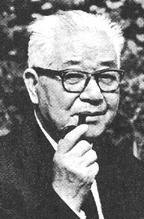 Leader of the Chinese Communist Party from 1924, but opposed the Comintern policy of subordinating the Communist Party to the Kuomintang, and joined the Trotskyists after the defeat of the Shanghai workers in 1927.
Peng Shuzi joined the Socialist Youth League in 1920 and then attended the University of the Toilers of the East in Moscow. At the time, Karl Radek was the chief Administrator of that institution. Joining the Chinese Communist Party in 1923 while still in Moscow, he ended up being elected to the Political Bureau of the CCP by 1925. Opposing the disastrous Comintern policies imposed on the CCP by Moscow, he joined with Chen Duxiu, the founder of the CCP, as supporters of the Left Opposition on hte basis of the Opposition's critique of the Chinese Revolution.
Peng spent 5 years in a Guomintang (Chinese Nationalist) prison and was freed in 1937. Maintaining an underground presence against both Guomintang and the CCP on the one side and organizing against the Japanese occupation on the other, Peng contributed to the building of the underground communist opposition in occupied China. After the war the Trotskyists started recruiting, but were subject to repression and Peng fled to Hong Kong. Peng became a key figure in the Fourth International while reporting on the repression of the Chinese Trotskyists during the 1951-1953 period.
Further Reading: Peng Shuzi Archive
Peng Zhen (1902 - 1997)
 Veteran of the China's 1949 revolution. Joined Chinese Communist Party in 1923 as a founding
member of the Shanxi Province CP. Arrested in 1929 but continued underground
political activities while imprisoned. He was released from prison in 1935 and
began organizing a resistance movement against the invading Japanese forces.
Around the same time, he was appointed the Organization Department Director of
the North Bureau of CCP. He is credited with substantial efforts towards the
1948 liberation of Beiping (renamed Beijing in 1949).
Veteran of the China's 1949 revolution. Joined Chinese Communist Party in 1923 as a founding
member of the Shanxi Province CP. Arrested in 1929 but continued underground
political activities while imprisoned. He was released from prison in 1935 and
began organizing a resistance movement against the invading Japanese forces.
Around the same time, he was appointed the Organization Department Director of
the North Bureau of CCP. He is credited with substantial efforts towards the
1948 liberation of Beiping (renamed Beijing in 1949).
Peng was a member of multiple Central Committees and the Secretariat of the Central Committee. He also held the positions of First Secretary of the Beijing Municipal Committee, Mayor of Beijing (1951), Secretary of the Political and Legal Affairs Commission CCP Central Committee (1980), and Chairman of the Standing Committee of the Sixth National People's Congress (1983).
Peng fell out of favor with Mao Zedong during the Cultural Revolution, but he survived to continue his role within the CCP. Peng retired from his leading political decisions in 1988 but continued to support the central collective leadership of China up to the time of his death.
Further Reading: Peng Zhen Reference Archive
Perera, Arthur Reginald (1915– 1977)
Party pseudonym: Regpee (?)
Nickname: Reggie
Born Karawanella (Ruwanwella Kegalle district), Ceylon. Educated St. John’s College, Panadura. Owned and operated a plantation. Joined the Youth League and participated in malaria relief work in Kegalla district. Founding member, Lanka Sama Samaja Party, 1935. Delegate, Indian National Congress, 1937. Arrested, 1940, and jailed at Bogambara and Badulla, 1942-45. Trade union leader, All-Ceylon Estate Workers Union. Member of Parliament, 1947-52. Split from LSSP and joined VLSSP, 1953. Member Senate and Upper House, 1959-72. Chief Government Whip, 1970-72. Founder, Sandella, an International Cultural Center. Author: Journey into Politics (1962) and Sadol Kandulu [Tears of the Outcasts], 1967. Ambassador to Egypt, 1971.
Compiled by Charles Wesley Ervin
Perera, K.V. Lorenz
Born Kalubowila, Ceylon. Attended Ceylon University College. Joined Lanka Sama Samaja Party, 1940; Secretary, 1940-42. Arrested late 1942; jailed at Bogambara, 1943-45. Member, Bolshevik Leninist Party of India (Ceylon Unit), 1945-50. Earned medical degree. Candidate, Ceylon parliamentary elections, 1947. Practised medicine in Wennappuwa.
Compiled by Charles Wesley Ervin
Perera, Margaret Selina (1909– 1986)
Party pseudonym: Desai (?)
Born Badulla, Ceylon, daughter of prominent Peiris family. Educated Musaeus College and University College, Colombo. Participated in Suriya Mal movement. Founding member, Lanka Sama Samaja Party, 1935. Married N.M. Perera after 1936 elections. Returned to UK in 1938, worked with Trotskyists, and earned BA in Indo-Aryan Languages from the School of Oriental and African Studies, 1939. Visited Socialist Workers Party in New York, 1939. Attempted to visit Trotsky in Mexico. Returned to Ceylon, 1940. Strike leader, Elephant cigarette company, 1942. Escaped to India, 1942, worked in Bolshevik Leninist Party of India groups in Bombay, Madras, and Calcutta, 1942-48. Attended BLPI conference, 1944. Entered SP, 1948. Member, Bengal Executive Committee of SP. Delegate to SP Convention, 1950. Founding leader, SP (Loyalists), 1952. Provisional Central Committee, MKP, elected 1955. Central Secretariat, Revolutionary Workers Party, 1958-60. Worked with unions in the Hind Mazdoor Sabha (Socialist trade union federation). Taught English for a living in Calcutta.
Compiled by Charles Wesley Ervin
Perera, Nanayakkarapathirage Martin (1905– 1979)
Party pseudonyms: A. Deshmukh, Oliver
Born Thotalanga, Ceylon, son of Nanayakkarapathirage Abraham Perera. Educated Ananda College and Ceylon University College, 1922-27; London School of Economics and University of London, 1927-33. Joined India League. Returned to Ceylon, 1933, joined South Colombo Youth League. Participated in Suriya Mal campaigns. Founding leader, Lanka Sama Samaja Party , 1935. Member of Ceylon State Council (Ruwanwella Constituency), 1936-40. LSSP delegate to Indian National Congress session, 1937. Formed Ratmalana Railway Workers’ Union, 1937, and All-Ceylon Estate Workers’ Union, 1939. Led militant strike at Mooloya Plantation, January 1940. Arrested June 1940, incarcerated at Wellikade Jail and Bogambara Prison. Escaped to Bombay, July 1942. Arrested in Bombay, July 1943. Jailed at Badulla, 1943-45. Member of Parliament (Ruwanwella and Yatiyantota constituencies), 1947-78. Elected President, Ceylon Federation of Labour, 1945. Led government workers strike, 1946, and strikes in 1947. Colombo Municipal Council, 1948-56. Mayor of Colombo, 1954-56. Minister of Finance, LSSP-SLFP-CP United Front governments, 1964-65 and 1970-75. Author: Parliamentary Democracy (1931), The Case for Free Education (1944), External Economic Assistance (1964), The Economy of Ceylon: Trends and Prospects (1971), and Critical Analysis of the NewConstitution of the Sri Lanka Government (1979).
Compiled by Charles Wesley Ervin
Perera, Wilmot A. (1905-73)
Born Horana, son of Abraham Perera, a wealthy landowner with rubber plantations in Raigam and Pasdun Korales. Educated at Cyril Jansze College, Panadura, and later at Royal College, Colombo. Took over father’s business. Married Esme Perera Abeywardena. Admired the British utopian socialist, Robert Owen, and the Ceylon-Tamil art historian, Ananda Coomaraswamy. Established first rural development society in Raigam Korale. Established Sri Palee College (Sripali Academy) in Horana on the model of Rabindranath Tagore’s Shanthi Niketan, 1934. Started the first midday meal program for students. Active in Suriyamal campaigns, 1933-35. Founding member Lanka Sama Samaja Party , 1935. Sided with Philip Gunawardena in the post-war split in LSSP. Member of Parliament (Matugama constituency), 1947-56. First Sri Lankan ambassador to China, 1957. Member of committee, Sino-Indian Cultural Society in India. Appointed to lead the Salaries and Cadres Commission (known as the Wilmot Perera Commission), which recommended abolition of the elite Ceylon Civil Service and establishment of an equal-opportunity unified administrative service, 1961. Donated his Panadura house to the Sri Sumangala Girl School. Author: Problems of Rural Ceylon (1932).
Compiled by Charles Wesley Ervin
Perlman, Fredy (1934-1985)
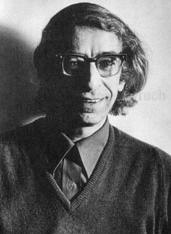 Czech-American anarchist author, publisher and activist.
Born in Brno, Czechoslovakia, he emigrated with parents to Bolivia in 1938 and to the United States in 1945 finally settling in Kentucky.
He attended UCLA from 1953-55 and on the staff of The Daily Bruin, the school newspaper, when the university administration fired all the editors. The editorscontinued publishing an independent campus paper. In 1956-59 he attended Columbia University where he studied English Literature, philosophy, political science and European literature. One particularly influential teacher for him at this time was C. Wright Mills.
He participated in anti-bomb and pacifist activities with the Living Theatre where he became the printe and during that time wrote The New Freedom, Corporate Capitalism and a play, Plunder. In 1963, he moved to Belgrade, Yugoslavia after living some months in Copenhagen and Paris. Fredy received a master’s degree in economics and a PhD at the law faculty; his dissertation was titled “Conditions for the Development of a Backward Region.” During his last year in Yugoslavia, he was a member of the Planning Institute for Kosovo and Metohija.
He returned to the US in 1966 and taught social science at Western Michigan University; he had students run their own classes and grade themselves. He translated Isaac Illych Rubin’s Essay on Marx’s Theory of Value and wrote an introduction to the book: “An Essay on Commodity Fetishism.”
In May 1968, after lecturing for two weeks in Turin, Italy, he went to Paris and participated in the May/June events and worked at the Censier center with the Citroen factory committee. After returning to Kalamazoo in August, he collaborated with Roger Gregoire in writing Worker-Student Action Committees, May 68. In January 1969 he completed The Reproduction of Daily Life. In August 1969 he moved to Detroit where he wrote The Incoherence of the Intellectual and with others translated Guy Debord’s Society of the Spectacle.
Throughout th e1970s Perlamn wrote and produced for Black & Red publications and wrote several books and translations. He travelled to Turkey, Egypt, Europe and regions of the U.S. In 1983, Fredy joined the cello section of the Dearborn Orchestra and in June 1985 performed quartets by Mozart and Schumann. On July 26, 1985, Fredy underwent heart surgery but died soon afterwards.
Pernerstorfer, Engelbert (1850-1918)
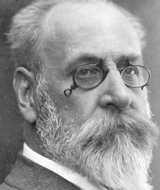 Pernerstorfer was the leading light of the so-called ‘Pernerstorfer Circle’. Along with Viktor Adler he was a significant figure in the Austrian Social Democratic movement and, between 1907 and 1918, Vice President of the Lower House of the Austrian Parliament. He was a founder of the Linz program and the pan-German (deutschnational) movement.
Pernerstorfer was the son of a dressmaker who had taken part in the Austrian revolution of 1848. After the early death of his father in 1854 and the inability of his mother to maintain the family business, Pernerstorfer was handed over the imperial general orphanage. In the 1860s he attended the Schottengymnasium, Vienna’s best grammar school. There he formed an intellectual circle which included Viktor Adler (later Chairman of the Social Democratic Worker’s Party), his brother Sigmund, Heinrich Friedjung, and Max Gruber. They rejected the bourgeois ideals of their fathers and advocated the importance of socialism and the intervention of the state for easing the burden of the poor.
Peshekhonov, A. V. (1867-1934)
Narodnik. Leader of "Peoples' Socialists" (left of Cadets). Minister of Supplies in 1st Coalition Provisional Government. Expelled from Russia for counter-revolutionary activity.
Petrović, Gajo (1927-1993)
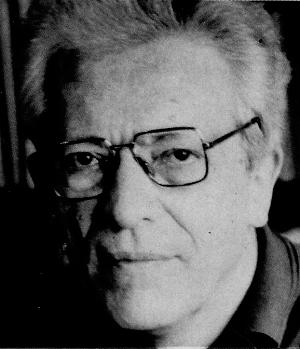 Marxist Humanist, one of the main theorists in the Praxis Group and long-time editor of the journal Praxis. He was one of the leaders of the Yugoslav critique of Stalinist philosophical ideas after the early 1950s. His philosophical views evolved towards an interpretation of Marxism based on the philosophical works of the young Marx. This was in line with the creative line of thought of a self-management socialism which dominated the Yugoslav political landscape at the time. However, his continuous radical criticism of the dogmatic ideology of the League of Communists of Yugoslavia led to an open conflict and in 1968 Petrović was expelled from the party for his support of the student movement.
The most important works of Petrović are: The Philosophical Views of G. V. Plekhanov (1957), Logic (1964), Philosophy and Marxism (1965), Philosophy and Revolution (1971), Why Praxis (1972), The Thought of Revolution (1978), Marx and the Marxists (1986) and In Quest of Liberty (1990).
Petty, William (1623-1687)
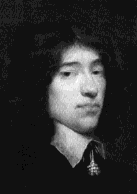 Founder of English Political Economy, successively seaman, physician, Professor of Anatomy, Professor of Music, inventor, surveyor, landowner, member of Parliament and statistician, whose main contribution to political economy, Treatise of Taxes and Contributions (1662), considered the role of the state in the economy and touched on the labour theory of value.
A founder of the Royal Society, he was a protagonist of the empirical scientific doctrines. Petty favoured giving free rein to the natural forces of individual self-interest. Unlike liberals after Adam Smith, however, Petty considered the maintenance of a high level of employment by monetary and fiscal policies and by public works to be a duty of the state. Marx argued that the bourgeoisie of this time needed the force of the state, via taxation or other means, to create conditions for capitalist accumulation. In the Treatise, he argued that the labour necessary for production was the main determinant of value.