The Liberator
First Published: 1918 - 1924
Source: Original copies of The Liberator from Tim Davenport (Corvallis, OR.), Riazanov Library Project (San Pablo, CA) and the Holt Labor Library (San Franicisco)
Transcription/Markup: Brian Baggins 2006. Main page redone by Tim Davenport and David Walters in 2009 – 2014
Digitization: Of new PDF run, 2012-14: Marty Goodman, The Riazanov Library Project, San Pablo, CA and Brooklyn, NY
Public Domain: USA History Archive 2006. This work is completely free. This work is in the Public Domain under the Creative Commons Common Deed. You can freely copy, distribute and display this work; as well as make derivative and commercial works. Please credit the Marxists Interent Archive as your source, include the url to this work, and note any of the transcribers, editors & proofreaders above. PDF of The Liberator Index compiled, written, & copyrighted by Theodore F. Watts. Published by Periodyssey Press in 2001. Permission granted to use here at the Marxists Internet Archive by the Author.
The original copies of The Liberator scanned in the course of this project came from my personal collection (which includes all but 2 issues), Tim Davenport's personal collection (which also includes all but two issues... two DIFFERENT issues from those I am missing) and Holt Labor Library of San Franciso's collection (which while not as complete as Tim's and mine is a VERY extensive and respectable collection).
All issues scanned were disassembled into individual pages (or pairs of joined pages) in order to make the highest quality scans from totally flat pages. Epson GT 20000 flat bed scanners were used exclusively in this project. Scanning was done both in San Pablo, CA and in Brooklyn, NY, the two scanning facilities of the Riazanov Library project (my two residences).
The vast majority of the scanned images are provided "straight off the scanner", with absolutely no editing or re-touching. Some of the two page cartoons were subjected to very minor post-processing editing (restoration), to fix holes in the page or stains from rusted staples, or discontinuities between two pages formerly joined but now separated.
It has been my pleasure to work with David Walters (of Holt Labor Library and Marxist Internet Archive) and Tim Davenport on this project, to both preserve (as these issues are rapidly turning to brown confetti) and make available to all this remarkable publication.
Martin H. Goodman MD
Director, Riazanov Library digital archive projects
Introduction to The Liberator collection
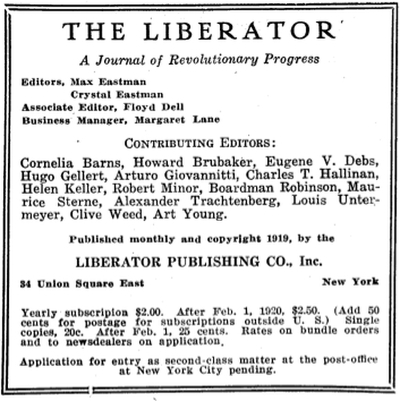
The Liberator, arguably the greatest radical magazine ever produced in America, began in the spring of 1918 as a successor to the New York left wing political, artistic, and literary magazine The Masses, which had been effectively terminated by postal censorship and Justice Department prosecution during World War I. Masses editor Max Eastman and his sister Crystal, a fine journalist and leading feminist of the day, determined to carry forward the Masses project in new clothes. The pair hoped to escape the political controversy which had handicapped and sunk its predecessor by launching a revised, smaller-format magazine with a new name.
The change of name did not mean a change of political orientation, however. As with The Masses, The Liberator continued to support various tendencies of the socialist movement, gradualist to revolutionary. The publication supported the labor movement in all its forms, remaining partial to the syndicalist Industrial Workers of the World, but still providing coverage to all radical elements in the labor movement, including those guiding independent unions such as the Amalgamated Garment Workers and those working to radicalize the American Federation of Labor.
The Liberator’s international news coverage was first-rate. Legendary war correspondent and Communist Labor Party founder John Reed reported the ongoing situation in Soviet Russia; major reports were filed from across tumultuous post-war Europe by Robert Minor, Hiram K. Moderwell, Frederick Kuh, and Crystal Eastman. Pivotal conventions of political parties and labor unions were covered in depth by intelligent participants. The great political trials of the day were reported in detail with perception. Speeches and articles by the great revolutionary leaders of the world found space on its pages. Nearly a century after the fact, The Liberator remains an essential primary source for the political history of its era.
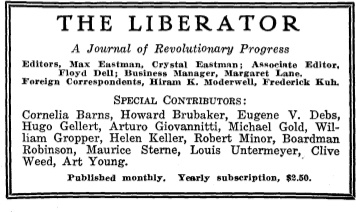
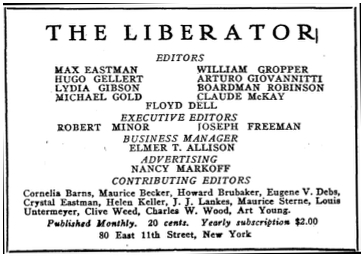
As with The Masses, The Liberator relied heavily upon political art, including contributions from some of the finest talents of the day. Among the artistic worthies who graced the publication’s pages were Art Young, Robert Minor, Lydia Gibson, Boardman Robinson, William Gropper, Maurice Becker, J.J. Lankes, and Fred Ellis. Each color cardstock cover of The Liberator was unique and distinctive, a miniature work of art, again echoing its illustrious predecessor. Poetry and fiction fleshed out its pages, including work by Carl Sandburg, Claude McKay, Arturo Giovannitti, and others. The magazine was, in short, a monthly intellectual banquet for the American radical intelligentsia, available on newsstands for just two thin dimes.
Maintaining a low cost of the elaborate publication for its readers came at a huge price, however. To economize, ultra-thin newsprint was used for the magazine’s pages — cheap and terrible, high in acid content. The result was predictable, a publication as fragile and ephemeral as a spring wildflower. Nine decades after the fact, the few surviving copies of The Liberator (particularly those prior to April of 1924) are inevitably browning and brittle, whisked by worried librarians from the general stacks of research libraries into the far less accessible special collections departments. Thus a great irony: the most important of American radical magazines of the early 1920s, The Liberator, is at the same time among the least readily available. No longer. Below, find high resolution images of every page, every word, and every image from all 78 issues of The Liberator that were printed.
Update: January 2015 With the Liberator project now complete... with meticulous high resolution and OCRed scans of it available here, below... we of the Riazanov Library digital archive project, the Early American Marxism web site, and Marxists Internet Archive web site have now changed this. The Liberator, at least in digital form, is now among THE most readily availabe radical magazines, world wide.
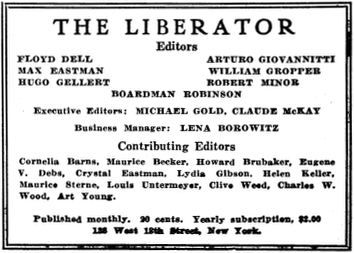
The Liberator ran into trouble in 1922 — both financial and motivational, as editor Max Eastman’s interests shifted from the mundane work of editing to book writing. Eastman ceded his editorial blue pencil around the first of January 1922, with literary critic Floyd Dell taking over the job.Throughout 1922 political matters were somewhat deemphasized in favor of art and culture under Dell’s watch. When finances became tight that year, the underground Communist Party of America moved to fill the void, working with Eastman, Dell, and the core of writers behind the magazine towards a friendly takeover of the publication effective in October of that same year. After the fall of 1922, The Liberator emerged as the de facto official organ of the CPA and its “Legal Political Party” sibling, the Workers Party of America — maintaining a similar graphic style and orientation toward fiction, albeit with a noticeable ideological narrowing of political content. Long articles began to be published by prominent Communist leaders, including C.E. Ruthenberg, John Pepper, William Z. Foster, Jay Lovestone, and Max Bedacht. Former anarchist turned Communist true believer Robert Minor served as editor during this period, assisted by Joseph Freeman as an associate editor in charge of literary material.
In November of 1924 The Liberator was merged with the Workers Party’s “Trade Union Educational League” magazine, The Labor Herald, and its “Friends of Soviet Russia” monthly, Soviet Russia Pictorial, to form a new publication. This new magazine, The Workers Monthly, was fundamentally similar to the 1923-24 vintage Liberator and continued as the Workers Party’s de facto theoretical journal until 1927, at which time it was given a new form and title as, The Communist. This magazine continues today, known since 1946 as Political Affairs.
Simultaneously, a new large format artistic-political monthly reminiscent of the original Masses (known as, appropriately enough, The New Masses) was launched by the Communist Party in May 1926. This publication carried The Liberator’s torch forward for another decade before gradually morphing into a plain paper newsweekly akin to The Nation or The New Republic. The New Masses was merged with the party general interest monthly Mainstream in January of 1948 to form Masses and Mainstream, a publication vaguely similar in format to Reader’s Digest, albeit with Communist political content.
Addendums & Updates to this 2009 Introduction
[We provide two versions of each issue of The Liberator. One is a viewing version which is digitized at a lower resolution suitable for excellent viewing on your computer. We also provide a version that is of a higher resolution that allows for the high quality printing of the issue, digital archiving on your own hard drive and maximum zoom with you PDF view. The size of each of the files is given after the link for it.]
Important Note: The tables of contents displayed for each issue are highly truncated version of the contents for each issue. They represent only the most important articles and do not reflect the full contents. However: at the top of each volume/year below the editorial boxes you will find a link to the full tables of contents for each and every issue. Additionally, on each of these full tables of contents are links to text-only version for easy downloading of the same table of contents.
Technical data for those interesting in scanning questions
Text-only pages: In both the low and high res files, these are rendered using 400 dpi 1 bit BW.
Charcoal Sketches: Sometimes 400 dpi 1 bit BW for view / lo-res files. More often 600 dpi 1 bit BW. 600 or 1200 dpi 1 bit BW for printer / hi res versions.
Grayish art requiring gray scale: 200, 260, or 300 dpi 8 bit gray scale for view lo res files. Depending on how much I need to keep file size down. 600 dpi 8 bit gray scale for printer / hi res files.
Color Covers: 300 dpi 24 bit color for view / lo res files. 600 dpi 24 bit color for printer / hi res files.
When Color is used in text or boarders for inside front, inside back, or back cover: Mostly 300 dpi, sometimes 266 or 240 or 200 dpi 24 bit color, for view / lo res files. 400 dpi 24 bit color for the printer / hi res files. For most issues I provide BOTH a 400 dpi 1 bit BW scan AND a color scan of inside front, inside back and back covers that have minor use of color.
To view all the covers in one large 62MB file containing 600dpi 24bit color, 1918-1924 click here
Why is single bit BW scanning used predominately in this digital archive? . . . To find out, go to the full Notes on the scanning of The Liberator
—Marty Goodman
The Liberator
Links to Notes, Special Compilations, Indexes
If you are having difficulty accessing The Liberator online, try downloading it to your hard drive as a PDF first and then opening it up.
The Liberator Index Compiled & written by Theodore F. Watts.Published by Periodyssey Press in 2001. Permission granted to use here at the Marxists Internet Archive by the Author.
All the covers One large 62MB file containing 600dpi 24bit color covers from 1918-1924
Notes on the scanning of The Liberator The notes by Marty H. Goodman on how he digitized The Liberator with all the technical details on equipment and settings.
Compilation of all Page 2 Political Cartoons There were 78 issues of The Liberator printed in the years 1918 thru 1924. 73 of them have two page wide political cartoons printed across the 2 page wide sheet in the center of the issue. This is a 69MB collection of digital scans of those cartoons.
Restored, high resolution scans of the cover art of The Liberator. These four files, below, present a recent (2024) project of re-scanning the original paper covers at resolutions of 800, 1200, and in some cases 1800 dpi, then spending hours per cover manually digitally repairing both damage and aging of those covers. Each file is between 100 and 200 megabytes in file size. A guide to these covers, and some information about them, is included as added text in these files (including a listing of covers sorted by the artist who drew them):
1918
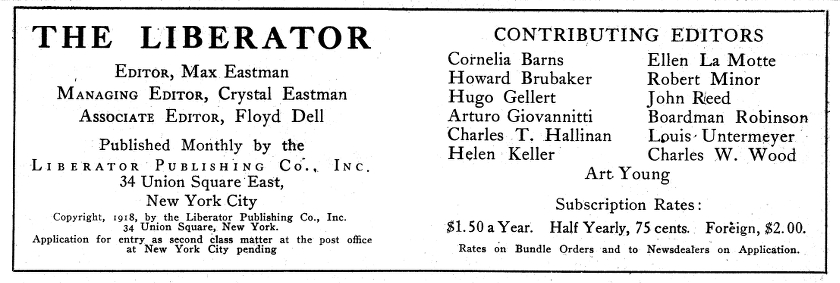
A complete compilation for Volume 1, 1918 of the tables of contents click here
|
Vol. 1, No. 1 [whole no. 1], March, 1918
Click here Viewing version (7.6mb PDF).
Click here Higher Resolution/Printing version (27.2mb PDF).
- “In Behalf of the IWW” — Helen Keller — pg. 13.
- “Red Russia” [part 1] — John Reed — pp. 14-21.
- “The Peril of Tom Mooney” — Robert Minor — pp. 29-31.
- Review of Trotsky’s The Bolsheviki and World Peace — Floyd Dell — pp. 33-34.
|
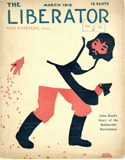
click thumbnail to see a higher
resolution version of the cover
art work (1.7mb) |
|
Issue No. 2, April, 1918
Click here Viewing version (7.8mb PDF).
Click here Higher Resolution/Printing version (26.8mb PDF).
|  click thumbnail to see a higher resolution version of the cover art work (1.8mb) |
|
Issue No. 3, May, 1918
Click here Viewing version (9.2mb).
Click here Higher Resolution/Printing version (34.6mb).
- “On the Inside” — William D. Haywood — pp. 15-16.
- “Wilson and the World’s Future” — Max Eastman — pp. 19-24.
- “Red Russia” [part 3] — John Reed — pp. 28-34.
| 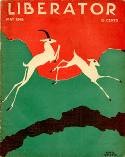 click thumbnail to see a higher resolution version of the cover art work (2.1mb) |
|
Issue No. 4, June, 1918
Click here Viewing version (7.1mb).
Click here Higher Resolution/Printing version (43.8mb).
- “The Masses Case” — Max Eastman — pp. 5-6.
- “The Story of the Trial” — Floyd Dell — pp. 7-18.
- “Speeches of Max Eastman and Morris Hillquit at the Masses Dinner, May 9” — pp. 19-21..
- “The Masses Jury” — Max Eastman — pp. 22-23.
- “A Message to Our Readers from John Reed Who Has Just Returned from Petrograd” — pp. 25-26.
- “Foreign Affairs” — John Reed — pp. 27-29.
- “What the Negro is Doing for Himself” — James Weldon Johnson — pp. 29-31.
|
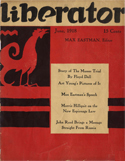 click thumbnail to see a higher resolution version of the cover art work (34mb) |
|
Issue No. 5, July, 1918
Click here Viewing version (6.7mb).
Click here Higher Resolution/Printing version (19mb).
- “Selecting a Perfect Jury” — Arturo Giovannitti — pp. 8-10.
- “Spring Comes Again” — Vera Buch — pp. 10-11.
- “Recognize Russia” — John Reed — pp. 18-20.
- “Labor and the War” — Morris Hillquit — pp. 21-22.
- “Kerensky is Coming!” — John Reed — pp. 23-27.
- “Norman Hapgood and Socialist Journalism” — Max Eastman — pg. 28.
- Letter to Norman Hapgood from John Reed, June 4, 1918. — pp. 28-29.
| 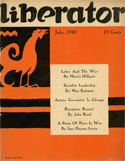 click thumbnail to see a higher resolution version of the cover art work (359kb) |
|
Issue No. 6, August, 1918
Click here Viewing version (6.5mb).
Click here Higher Resolution/Printing version (28mb).
- “Were You Ever a Child?” [Part 1] — Floyd Dell — pp. 5-10.
- “Recognize the Soviets” — George V. Lomonossoff — pp. 11-13.
- “Socialists and Suppression” — Arturo Giovannitti — pp. 13-14.
- “How the Russian Revolution Works” — John Reed — pp. 16-21.
- “Impressions of the AF of L Convention” — Symposium by “T.L.M.”, “H.M.”, Crystal Eastman — pp. 26-27.
- “Silence — And the Resurrection: A Letter from William Bross Lloyd” with “In Reply” by Max Eastman — pp. 30-32.
- “From Norman Hapgood” [letter of June 18, 1918] with “John Reed Explains” by John Reed — pp. 32-34.
|
 click thumbnail to see a higher resolution version of the cover art work (1.7) |
|
Issue No. 7, September, 1918
Click here Viewing version (6.1mb).
Click here Higher Resolution/Printing version (23.9mb).
- “With Gene Debs on the Fourth” — John Reed — pp. 7-9.
- “Lenin — A Statesman of the New Order” [part 1] — Max Eastman — pp. 10-13.
- “New York and I” [poem] — Arturo Giovannitti — pp. 14-15.
- “Were You Ever a Child: A Discussion of Education” [part 2] — Floyd Dell — pp. 15-17.
- “The Social Revolution in Court” [IWW trial] — Art Young and John Reed — pp. 20-28.
|
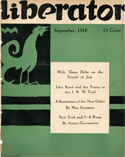 click thumbnail to see a higher resolution version of the cover art work (29mb) |
|
Issue No. 8, October, 1918
Click here Viewing version (7.3mb).
Click here Higher Resolution/Printing version (23.7mb).
- “The Farmers’ Crusade: Letters from George Cronyn, a Non-Partisan League Organizer” — pp. 5-12.
- “A Suffrage Trial in Washington” — Lucy Burns — pp. 19-20.
- “Brest-Litovsk: A Brigand’s Peace” — Nikolai Lenin — pp. 22-23.
- “Lenin — A Statesman of the New Order” [part 2] — Max Eastman — pp. 28-33.
- “Were You Ever a Child: A Discussion of Education” [part 3] — Floyd Dell — pp. 36-39.
- Socialist Party Congressional Platform — pp. 42-45.
|
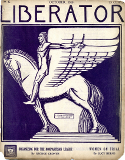 click thumbnail to see a higher resolution version of the cover art work (1.4mb) |
|
Issue No. 9, November, 1918
Click here Viewing version (7.8mb).
Click here Higher Resolution/Printing version (20mb).
- “The Trial of Eugene Debs” — Max Eastman — pp. 5-12.
- “On Intervention in Russia” — John Reed — pp. 14-17.
- “To Nicolai Lenin” [poem] — Max Eastman — pg. 17.
- “Were You Ever a Child: A Discussion of Education” [part 4] — Floyd Dell — pp. 20-24.
- “Pro-German” [letter to The New Republic] — William Bross Lloyd — pg. 25.
A Symposium on the Creel Documents — pp. 28-29.
- “The Structure of the Soviet State” — John Reed — pp. 32-38.
|
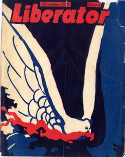 click thumbnail to see a higher resolution version of the cover art work (1.4mb) |
|
Issue No. 10, December, 1918
Click here Viewing version (8.6mb).
Click here Higher Resolution/Printing version (17.6mb).
- “The Seventh Tier Soviet” — Roger N. Baldwin — pp. 10-11.
- “The War Labor Board” — “H.M.” — pp. 12-15.
- “The Italian Workers and the War” — Carlo Tresca — pp. 19-21.
- “November Seventh, 1918: A Speech in Commemoration of the Founding of the Soviet Republic in Russia” — Max Eastman — pp. 22-23.
- “Recent Impressions of Russia: Verbatim Report of a Conversation with Albert Rhys Williams” — Rose Pastor Stokes and Graham Stokes — pp. 24-33.
- “Russia’s Answer to the Charge of Terrorism” — Chicherin — pp. 34-35.
- “About the Second Masses Trial” — John Reed — pp. 36-38.
- “The Election Gains of the Nonpartisan League” — Olive S. Morris — pp. 38-40.
|
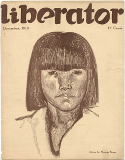 click thumbnail to see a higher resolution version of the cover art work (1.3mb) |
1918 Liberator Pamphlets:
1919
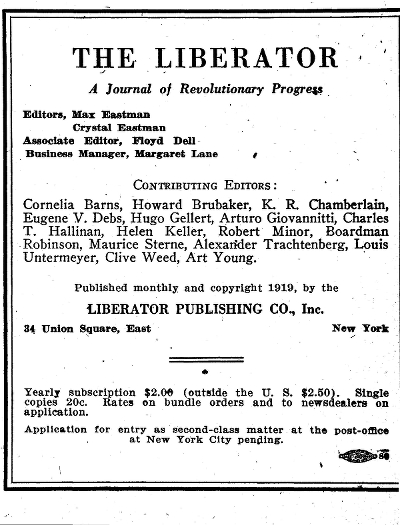
A complete compilation for Volume 2, 1919 of the tables of contents click here
|
Issue No. 11, January, 1919
Click here Viewing version (9.4mb).
Click here Higher Resolution/Printing version (29mb).
- “A Letter to American Workingmen” [edited] — Nikolai Lenin — pp. 8-12.
- “What Are You Doing Out There?” — Floyd Dell — pp. 14-15.
- “How Soviet Russia Conquered Imperial Germany” — John Reed — pp. 16-23.
- “Demobilizing the Trade Unions” — “H.M.” — pp. 28-32.
- “Note from the Russian Government to President Wilson” — Chicherin — pp. 38-41.
|
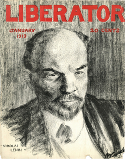 click thumbnail to see a higher resolution version of the cover art work (2.1mb) |
|
Issue No. 12, February, 1919
Click here Viewing version (8.4mb).
Click here Higher Resolution/Printing version (18.1mb).
- “The Socialist Party on Trial” — William Bross Lloyd — pp. 10-13.
- “The Silent Defense in Sacramento” [IWW Trial] — Jean Sterling — pp. 15-17.
- “Who’s Who in the German Revolution?” — German newspaper reporter — pp. 18-21.
- “Making the World Safe for a Sick Idea” — Charles W. Wood — pp. 22-24.
- “The Latest from Russia” — John Reed — pp. 24-25.
- “Great Bolshevik Conspiracy!” — John Reed — pg. 32.
- “Our Own Black Hundred” — John Reed — pg. 32.
|
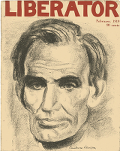 click thumbnail to see a higher resolution version of the cover art work (1.2mb) |
|
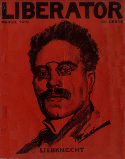
Issue No. 13, March, 1919
Click here Viewing version (9.1mb).
Click here Higher Resolution/Printing version (18.4mb).
- “The Hour of the People Has Come” — Klara Zetkin, Rosa Luxemburg, Karl Liebknecht, Franz Mehring — pg. 3.
- “Bob Minor and the Bolsheviki” — Max Eastman — pp. 5-6.
- “Lenin and Wilson” [fiction] — Max Eastman — pg. 8-11.
- “The Senate of the Dead” [poem] — Arturo Giovannitti — pp. 12-14.
- “Liebknecht Dead” — John Reed — pp. 16-18.
- “The Mooney Congress” — Crystal Eastman — pp. 19-24.
- “The Peace that Passeth Away” [fiction] — John Reed — pp. 25-31.
- “Ireland and the British Elections” — Hannah Sheehy Skeffington — pp. 32-34.
- “The Truth About Breshkovsky” — “X.” — pp. 36-37.
- “The Why, Wherefore and Whenas of Prohibition” — Charles W. Wood — pp. 40-42.
- “Darkness Before Dawn” [Review of The Labor Movement in Japan by Sen Katayama] — John Reed — pp. 44-45.
|
 click thumbnail to see a higher resolution version of the cover art work (1.6mb) |
|
Issue No. 14, April, 1919
Click here Viewing version (8.9mb).
Click here Higher Resolution/Printing version (27.7mb).
- “A Message from Debs” [March 11, 1919 letter] — Eugene V. Debs — pg. 3.
- “Scott Nearing Reprieves Democracy” — Arturo Giovannitti — pp. 5-7.
- “Beating Prohibition to It” — Floyd Dell — pp. 15-18.
- “Are Russian Women ‘Nationalized’?” — Louise Bryant — pp. 20-21.
- “Prinkipo and After” — John Reed — pp. 21-22.
- “When is a Revolution Not a Revolution: Reflections on the Seattle General Strike by a Woman Who Was There” — pp. 23-25.
- “Ten Days that Shook the League of Nations” — Floyd Dell — pp. 29-31.
- “The Soviet of the Far East: Verbatim Report of a Conversation with Gertrude M. Tobinson, Wife of Krasnochokov, President of the Far Eastern Soviet in Siberia” — pp. 32-36.
- “Can the Workers Run the World” — James Peter Warbasse — pg. 37.
|
 click thumbnail to see a higher resolution version of the cover art work (1.3mb) |
|
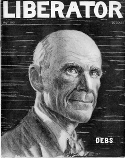
Issue No. 15, May, 1919
Click here Viewing version (8.3mb).
Click here Higher Resolution/Printing version (17.1mb).
- “The Liars poem” by Carl Sandburg pg. 8
- “The Invincible I.W.W.” pg. 9
- “News from Siberia” pg. 12
- “Mannerheim (from Our Special Correspondent in Eurpoe)” pg. 13
- “ The Death Train of Siberia” pg. 19
- “Education Under the Bolsheviks” pg. 14
- “Translation from report” by Lunacharsky pg.
- “In Memory of Jessie Ashley” pg. 28
- “The Blessings of Militarism” pg. 29
- “Six brilliant and still-current frames of cartoons” by Gropper pg. 31
- “The Eighth Day” by Arturo Giovannitti pg. 32
- “The Lawrence Strike” pg. 35
- “Feminism” pg. 37
- “Robert Minor in Russia” pg. 38
- “Bolshevism – What it is Not” by John Reed pg. 39
|
 click thumbnail to see a higher resolution version of the cover art work (1.3mb) |
|
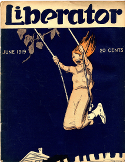
Issue No. 16, June, 1919
Click here Viewing version (9.2mb).
Click here Higher Resolution/Printing version (25.6mb).
- “Follow Us” — Maxim Gorky — pg. 3.
- “May Day in Ft. Leavenworth” —
- “A Socialist C.O.” — pg. 20.
- “Art Under the Bolsheviks: From Documentary Reports, Decrees, and Plans of the Soviet State” — Floyd Dell — pp. 11-18.
- “Is Mexico in Danger?” — John Kenneth Turner — pp. 19-21.
- “The Tide Flows East” — John Reed — pp. 27-29.
- “His Majesty’s Government Writes History” — “X” — pp. 33-44.
- “Austria Waits for the Harvest” — Hiram K. Moderwell — pp. 45-47.
- “Personalities at Berne” — Hiram K. Moderwell — pg. 47.
|
 click thumbnail to see a higher resolution version of the cover art work (2.5mb) |
|
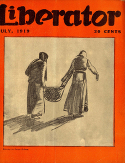
Issue No. 17, July, 1919
Click here Viewing version (8.2mb).
Click here Higher Resolution/Printing version (21.8mb).
- “A Message from Hungary to the American Workingmen” — Bela Kun — pg. 9.
- “The IWW Convention” — Mary Marcy — pp. 10-12.
- “Count Karolyi Tells Why” — Hiram K. Moderwell — pg. 13-16.
- “Revolutionary Socialism in France” — Fredeick R. Kuh — pp. 18-19.
- “Sonnets and Songs” [poetry] — Claude McKay — pp. 20-21.
- “Religion Under the Bolsheviks” — “X.” — pp. 21-24.
- “The New International” — Max Eastman — pp. 28-35.
- “The Winnipeg Strike” — Frances Fenwick Williams — pp. 39-44.
|
 click thumbnail to see a higher resolution version of the cover art work (2.9mb) |
|
Issue No. 18, August, 1919
Click here Viewing version (8.6mb).
Click here Higher Resolution/Printing version (29mb).
- “In Communist Hungary” — Crystal Eastman — pp. 5-10.
- “The Convention of the Dead” [AF of L] — John Reed — pp. 12-20.
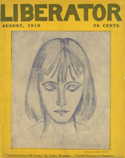
- “The Sparticide Insurrection” [part 1] — Robert Minor — pp. 22-25.
- “Conversations with Lenin” — Arthur Ransome — pp. 31-35.
- “May Day in Paris” — “An American” — pp. 41-46.
- “Negro Poems” [poetry] — Claude McKay — pg. 46.
|
 click thumbnail to see a higher resolution version of the cover art work (1.7mb) |
|
Issue No. 19, September, 1919
Click here Viewing version (8mb).
Click here Higher Resolution/Printing version (20.3mb).
- “To Our American Comrades of the Railroads from the President of the British Railroad Workers” — C.T. Cramp — pg. 8.
- “To the American Workers, the General Transport Workers of All Grades and Sections in Particular, from the Secretary of the British Transport Workers” — Robert Williams — pg. 9.
- “The Blood of Munich” — Hiram K. Moderwell — pp. 10-19.
- “All About It: Art Young in Washington” — Art Young — pp. 20-23.
- “Blocking the General Strike” [Paris] — Lewis Gannett — pg. 24.
- “British Labor is Moving” — Crystal Eastman — pp. 28-30.
- “The Sparticide Insurrection” [part 2] — Robert Minor — pp. 31-39.
- “The U.S. Revolutionary Training Institute” [Leavenworth] — H. Austin Simmons — pp. 42-44.
|
 click thumbnail to see a higher resolution version of the cover art work (2.5mb) |
|
Issue No. 20, October, 1919
Click here Viewing version (11.3mb).
Click here Higher Resolution/Printing version (37.7mb).
- “A Statement and a Challenge” — Nicolai Lenin — pg. 3.
- “The Chicago Conventions” — Max Eastman, drawings by Art Young — pp. 5-19.
- “Class War in Italy” — Hiram K. Moderwell — pp. 20-23.
- “S-s-s-s-h!” [Lusk Committee] — Max Eastman — pg. 24.
- “The Workers of the Clyde” — Crystal Eastman — pp. 28-33.
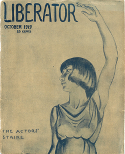
- “The Lesson of the Actors’ Strike” — Max Eastman — pp. 35-40.
- “A Message from Bulgaria” — Ivan Vassilev Vodenitcharov — pp. 41-42.
|
 click thumbnail to see a higher resolution version of the cover art work (4.6mb) |
** THERE WAS NO ISSUE FOR NOVEMBER 1919 **
|
Issue No. 21, December, 1919
Click here Viewing version (8.5mb).
Click here Higher Resolution/Printing version (29mb).
- “A Middle Aged Professor in Moscow” — W.T. Goode — pg. 3.
- “Pittsburgh or Petrograd?” — Floyd Dell — pp. 5-10.
- “Leftward Ho!” [Account of Congress of British TUC] — Walter G. Fuller — pp. 11-14.
- “A Message from Smillie” — Robert Smillie — pp. 16-17.
- “Back from Siberia” — Frances Fenwick Williams — pp. 18-20.
- “G.B.S. at Home” [George Bernard Shaw] — Robert L. Wolf — pp. 22-23.
- “A Declaration of Intellectual Independence” — Romain Rolland — pg. 23.
- “A Letter to Romain Rolland” — Max Eastman — pp. 24-25.
- “I Got Arrested a Little” — Robert Minor — pp. 28-38.
|
 click thumbnail to see a higher resolution version of the cover art work (2.4mb) |
1919 Liberator Pamphlet:
- 1. “Liberator Russian Pamphlet” including
- “The Structure of the Soviet State” (Reed),
- “Letter to American Workingmen” (Lenin),
- “Lenin and Wilson” (Eastman),
- “Message from the Soviet Government to President Wilson.” 64 pp.
1920
A complete compilation for Volume 3, 1920 of the tables of contents click here
|
Issue No. 22, January, 1920
Click here Viewing version (9mb).
Click here Higher Resolution/Printing version (20.2mb).
- “Russia Victorious: Verbatim Report of a Conversation with Isaac McBride” — pp. 3-14.
- “The Steel Strike” — Mary Heaton Vorse — pp. 16-19.
- “The New Wild West” [Centralia] — pp. 21-23.
- “Well, What About Mexico?” — Irwin Granich [Mike Gold] — pp. 24-38.
- “Inquisition” — M.A. Stolar — pp. 29-30.
- “Bogalusa” — Mary White Ovington — pp. 31-33.
- “Hope Revives in Hungary” — Frederick Kuh — pp. 37-39.
- “The Presumption of Innocence — in Kansas” — Winthrop D. Lane — pg. 39.
- “Practical Feminism” [Labor Party Convention] — Crystal Eastman — pg. 40.
|
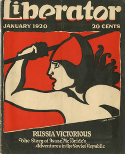 click thumbnail to see a higher resolution version of the cover art work (1.4mb) |
|
Issue No. 23, February, 1920
Click here Viewing version (9.8mb).
Click here Higher Resolution/Printing version (23mb).
- “Examples of ‘Americanism’” — Max Eastman — pp. 13-16.
- “Murder in Centralia” — J.T. Doran — pp. 16-18.
- “Counter Revolution in Advance: A Summary of Recent German History” — “A historian who was present during the events” — pp. 22-25.
- “‘Solidarity! Serenity! Audacity!’: An Account of the Italian Situation” — Hiram K. Moderwell — pp. 28-37.
|
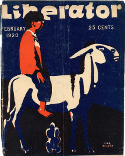 click thumbnail to see a higher resolution version of the cover art work (2.6mb) |
|
Issue 24, March, 1920
Click here Viewing version (10.4mb).
Click here Higher Resolution/Printing version (29.4mb).
- “Communism on Trial” — Arturo Giovannitti — pp. 5-8.
- “An Interview with Bela Kun” — Frederick Kuh — pp. 16-21.
- “The Communist Ambassador” [L.C.A.K. Martens] — Robert L. Wolf — pp. 28-32.
- “Dissolving the Duma at Albany” — Robert Minor — pp. 34-39.
- “Mexico Again” [letter of John Kenneth Turner] and reply by Irwin Granich [Michael Gold] — pp. 40-41.
- “Robert Lansing Explains Bolshevism” — Max Eastman — pp. 42-46.
|
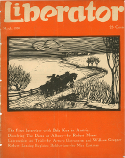 click thumbnail to see a higher resolution version of the cover art work (2.4mb) |
|
Issue No. 25, April, 1920
Click here Viewing version (10.6mb).
Click here Higher Resolution/Printing version (23.1mb).
- “The Log of the Transport Buford” — Alexander Berkman — pp. 9-12.
- “Fear in the Jury Box” [Centralia] — John Nicholas Beffel — pg. 13.
- “A Psycho-Analytical Confession” [Soviet Russia] — Floyd Dell — pp. 15-19.
- “Malatesta in Italy” — Carlo Tresca — pp. 22-24.
- “In Portugal” — John Dos Passos — pg. 25.
- “A Yankee Convention” [Cooperative Congress] — Robert Minor — pp. 28-34.
- “The Clarté Movement” — Max Eastman — pp. 40-42.
|
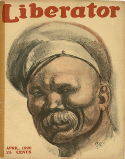 click thumbnail to see a higher resolution version of the cover art work (3.7mb) |
|
Issue No. 26, May, 1920
Click here Viewing version (10.2mb).
Click here Higher Resolution/Printing version (32.5mb).
- “Democracy and Revolution” [part 1] — Bertrand Russell — pp. 10-14.
- “On Lenin’s Birthday” [poem] — Arturo Giovannitti — pg. 15.
- “Guilty by Inference” [Winitsky Trial] — Floyd Dell — pp. 17-19.
- “The Great Flop” [IWW-related] — Robert Minor — pp. 20-22.
|
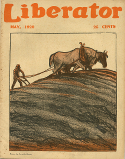 click thumbnail to see a higher resolution version of the cover art work (3.6mb) |
|
Issue No. 27, June, 1920
Click here Viewing version (6.6mb).
Click here Higher Resolution/Printing version (13.3mb).
- “Palmer and the Outlaws” — Robert Minor — pp. 5-12.
- “Jim Larkin Goes to Jail” — Louise Bryant — pp. 13-16.
- “Why Copper is Red” — William F. Dunne — pg. 17-20.
- “Self-Determination of Nations: A Speech” — Nikolai Lenin — pp. 21-22.
- “Democracy and Revolution” [part 2] — Bertrand Russell — pp. 23-25.
| 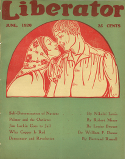 click thumbnail to see a higher resolution version of the cover art work (2.4mb) |
|
Issue No. 28, July 1920
Click here Viewing version (11.5mb).
Click here Higher Resolution/Printing version (27.2mb).
- “The Mexican Revolution” — Carleton Beals and Robert Haberman — pp. 5-11.
- “Caesar and Spartacus” [Germany] — Hiram K. Moderwell — pp. 14-21.
- “The Socialist Party Convention” — Crystal Eastman — pp. 24-29.
- “In the Shell of the Old” [ACW Convention] — Michael Gold, drawings by Robert Minor — pp. 30-34.
- “Fellow Criminals!” — Floyd Dell — pp. 35-41.
- “England and the White Terror” — Frederick Kuh — pp. 43-44.
- “Our Debs” [review of Debs: His Authorized Life and Letters by David Karsner] — Floyd Dell — pp. 45-50.
| 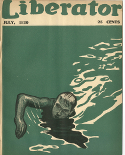 click thumbnail to see a higher resolution version of the cover art work (2.2mb) |
|
Issue 29: August 1920
Click here Viewing version (8.6mb).
Click here Higher Resolution/Printing version (21mb).
- “The Wars of West Virginia” — Robert Minor — pp. 7-13.
- “Robert Williams Sees Russia” — Robert Williams — pp. 14-15.
- “Italy Tests Her Strength” — Paul DeMott — pp. 15-16.
- “Anarchists and Others in Russia” — Griffin Barry — pp. 17-21.
- “Putting Theories Into Practice” [Italy] — Hiram K. Moderwell — pp. 24-25.
| 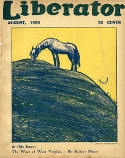 click thumbnail to see a higher resolution version of the cover art work (3.5mb) |
|
Issue 30: September 1920
Click here Viewing version (7.9mb).
Click here Higher Resolution/Printing version (16.8mb).
- “Nietzsche, Plato and Bertrand Russell” — Max Eastman — pp. 5-10.
- “Guilty: The General Strike” [CLP Trial] — H. Austin Simons — pp. 12-15.
- “The Democratic Convention” — Charles Erskine Scott Wood — pp. 25-26.
- “‘Communism But’” [Bertrand Russell] — Floyd Dell — pp. 27-29.
| 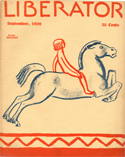 click thumbnail to see a higher resolution version of the cover art work (1.9mb) |
|
Issue 31: October 1920
Click here Viewing version (8.1mb).
Click here Higher Resolution/Printing version (16.7mb).
- “I Change My Mind a Little” — Robert Minor — pp. 5-13.
- “Rosa Luxemburg to Sonia Liebknecht” [prison letter of Dec. 1917] — pp. 12-13.
“‘Now That You’ve Got the Vote’” — Floyd Dell — pp. 14-16.
- “Under Two Flags” [Italian radicals in New York] — Michael Gold — pp. 17-19.
- “Mexican Labor and the Mexican Government” — Carleton Beals and Robert Haberman — pp. 20-23.
- “New Soviets for Old” — Floyd Dell — pp. 25-27.
- “Farmer Strikers in Spain” — John Dos Passos — pp. 28-30.
| 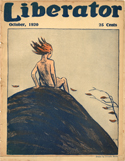 click thumbnail to see a higher resolution version of the cover art work (4.8mb) |
|
Issue 32: November 1920
Click here Viewing version (9.4mb).
Click here Higher Resolution/Printing version (27.5mb).
- “In Praise of Lenin” — Maxim Gorky — pp. 5-7.
- “About Dogmatism” — Max Eastman — pg. 8.
- “Answer to My Critics” — Robert Minor — pp. 8-11 (microfilm defective)
- “Communist Factories in Italy” — unsigned — pp. 12-14.
- “Back Home in Russia” — unsigned — pp. 15-21.
- “Hillquit Excommunicates the Soviet” — Max Eastman — pp. 22-25.
|  click thumbnail to see a higher resolution version of the cover art work (1.7mb) |
|
Issue 33: December 1920
Click here Viewing version (6.8mb).
Click here Higher Resolution/Printing version (15.1mb).
- “John Reed” — Max Eastman — pp. 5-6.
- “Soviet Russia Now” — John Reed — pp. 9-12.
- “The Outlaws At It Again” [Pennsylvania coal] — Robert Minor — pp. 12-17.
- “Science on Trial” [Ruthenberg-Ferguson Trial] — Max Eastman — pp. 20-21.
- “Now We Can Begin” [Women’s Suffrage] — Crystal Eastman — pp. 23-24.
- “Palmer’s Last Crime” — Art Shields — pp. 24-26.
|  click thumbnail to see a higher resolution version of the cover art work (2.0mb) |
1921
A complete compilation for Volume 4, 1921 of the tables of contents click here
|
Issue 34: January 1921
Click here Viewing version (12mb).
Click here Higher Resolution/Printing version (23.5mb).
- “Twenty Years” [IWW] — Mary Heaton Vorse — pp. 10-12.
- “Soviet Russia Now” — John Reed — pp. 14-17.
- “Hillquit Repeats His Error” — Max Eastman — pp. 20-24.
- “Announcement” [of resignation as co-editor] — Max Eastman — pg. 24.
| 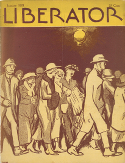 click thumbnail to see a higher resolution version of the cover art work (3.2mb) |
|
Issue 35: February 1921
Click here Viewing version (11mb).
Click here Higher Resolution/Printing version (23.9mb).
- “Locked Out” [ACW] — Mary Heaton Vorse — pp. 5-8.
- “Last Days With John Reed: A Letter From Louise Bryant” — pp. 11-14.
- “On Duty in Russia: A Letter from Boris Reinstein” — pp. 16-17.
- “Toward Proletarian Art” — Irwin Granich [Mike Gold] — pp. 20-22.
| 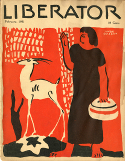 click thumbnail to see a higher resolution version of the cover art work (2.1mb) |
|
Issue 36: March 1921
Click here Viewing version (12mb).
Click here Higher Resolution/Printing version (20mb).
- “One Dead — Two in Danger” [Sacco-Vanzetti] — Robert Minor — pp. 9-10.
- “A Little Bit of Millenium” [Stelton, NJ commune] — Michael Gold — pp. 12-15.
- “The Split in Italy” — Norman Matson — pp. 16-21.
- “Wilson’s Style” — Max Eastman — pp. 24-27.
| 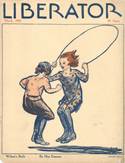 click thumbnail to see a higher resolution version of the cover art work (2.3mb) |
|
Issue 37: April 1921
Click here Viewing version (13.2mb).
Click here Higher Resolution/Printing version (28mb).
- “Foster” [editorial] — Max Eastman — pp. 5-6.
- “Alice Paul’s Convention” [Woman’s Party] — Crystal Eastman — pp. 9-10.
- “Bill Haywood, Communist” — Max Eastman — pp. 13-14.
- “The Class Duel in Spain” — Carleton Beals — pp. 16-21.
- “The Story of Alex Howat” — James P. Cannon — pp. 25-28.
| 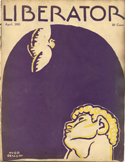 click thumbnail to see a higher resolution version of the cover art work (2.3mb) |
|
Issue 38: May 1921
Click here Viewing version (12mb).
Click here Higher Resolution/Printing version 21.6mb).
- “Dogmatism Again” [polemic with Robert Dell on Soviet Russia] — Max Eastman — pp. 5-8.
- “The International of Patience” [Vienna] — Frederick Kuh, with drawings by Gergel — pp. 12-15.
- “The Beleaguered Amalgamated” — Arturo Giovannitti — pp. 16-20.
- “The Red Army in the Near East” — “Our Special Correspondent” — pp. 21-24.
- “Georgia Saves Her Reputation: An Eyewitnesses’ Impression of the Peonage Murder Trial” — Esau Jones — pg. 24.
|
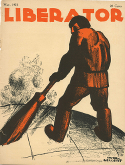 click thumbnail to see a higher resolution version of the cover art work (2.6mb) |
|
Issue 39: June 1921
Click here Viewing version (13.9mb).
Click here Higher Resolution/Printing version 25mb).
- “Clarifying the Light” [Clarté group] — Max Eastman — pp. 5-7.
- “The Triple Alliance Backs Down” — Charles T. Hallihan — pp. 9-12.
- “Communist Jail-Keepers” — Louise Bryant — pp. 12-14.
- “The Seamen’s Strike” — Winthrop D. Lane — pp. 15-16.
- “How Black Sees Green and Red” [Sinn Fein] — Claude McKay — pp. 17-21.
- “The Children of White Hungary” — unsigned — pg. 21.
- “We Who Stay” [poem] — Rose Pastor Stokes — pp. 22-23.
- “The Muscovite Steam-Roller” — “Our Special Correspondent” — pp. 24-26.
- “Preliminary Skirmishes in Italy” — Norman Matson — pp. 28-29.
| 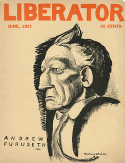 click thumbnail to see a higher resolution version of the cover art work (2.5mb) |
|
Issue 40: July 1921
Click here Viewing version (8.6).
Click here Higher Resolution/Printing version 21mb).
- “Personal Testimony” [IWW] — John L. Murphy — pg. 7.
- “Marriage and Freedom” [part 1] — Floyd Dell — pp. 16-21.
- “‘Guns, Bombs and Benzine’” [Italy] — Normat Matson — pp. 22-24.
- “In Memory” [poem] — Louise Bryant — pg. 24.
- “Tulsa — Oklahoma”— Harry Salpeter — pp. 25-26.
- “The Siege is Lifted” [ACW] — Arturo Giovannitti — pp. 27-29.
- “More News from Nowhere” — Michael Gold — pp. 30-32
| 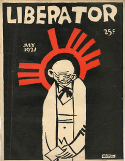 click thumbnail to see a higher resolution version of the cover art work (2.5mb) |
|
Issue 41: August 1921
Click here Viewing version (8.7mb).
Click here Higher Resolution/Printing version 18.8mb).
- “Poems” — Claude McKay — pp. 10-11.
- “Booze and Gompers Über Alles!” [AF of L] — Luigi Antonini — pp. 13-15.
- “Marriage and Freedom” [part 2] — Floyd Dell — pp. 16-21.
- “The Socialist Pin-Wheel” [convention] — “Our Special Correspondent” — pp. 22-24.
- “To Abolish Justice” — Charles W. Wood — pp. 28-29
- “A Gas Light Sonata” — Michael Gold — pp. 30-32
| 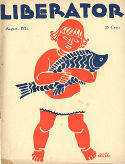 click thumbnail to see a higher resolution version of the cover art work (1.9mb) |
|
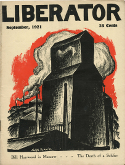
Issue 42: September 1921
Click here Viewing version (7.4mb).
Click here Higher Resolution/Printing version 21mb).
- “Bill Haywood in Moscow” — Lewis Gannett — pp. 11-12.
- “The Anarchists of Italy” — Norman Matson — pp. 22-24.
- “Freedom in Mexico” — Frank Seaman — pg. 25.
- “The Inside of the Clothing Business” — Charles W. Wood — pp. 26-27.
|  click thumbnail to see a higher resolution version of the cover art work (2.9mb) |
|
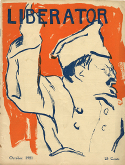
Issue 43: October 1921
Click here Viewing version (9.3mb).
Click here Higher Resolution/Printing version (22mb).
- “An Opinion on Tactics” — Max Eastman — pp. 5-6.
- “French Labor and Moscow” — Norman Matson — pp. 8-10.
- “The Parliament of Man” [Moscow] — Agnes Smedley — pp. 13-15.
- “The Battle of Logan County” [West Virginia miners] — Art Shields — pp. 16-21.
- “Marriage and Freedom” [part 3] — Floyd Dell — pp. 22-26.
- “In Defense of Clarté” [letter] — Henri Barbusse — pg. 30.
|
 click thumbnail to see a higher resolution version of the cover art work (2.2mb) |
|
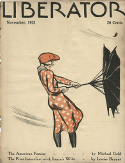
Issue 44: November 1921
Click here Viewing version (9mb).
Click here Higher Resolution/Printing version (31mb).
- “The American Famine” — Michael Gold, drawings by Hugo Gellart — pp. 5-11.
- “The First Woman of Russia” [Krupskaia] — Louise Bryant — pp. 20-21.
- “Would You Like to Be a Child?” — Floyd Dell — pp. 22-24.
- “The History of Five Years” — William Gropper — pg. 25.
- “Wanted: A Religious Revival” — Charles W. Wood — pp. 26-28.
|  click thumbnail to see a higher resolution version of the cover art work (2.2mb) |
|
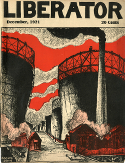
Issue 45: December 1921
Click here Viewing version (11.6mb).
Click here Higher Resolution/Printing version (39.5mb).
- “A Response” [to critics of “An Opinion on Tactics”] — Max Eastman — pp. 6-9.
- “Who Will Help the Liberator?” [emergency appeal of editors] — pg. 7.
- “Four Sonnets” [poetry] — Claude McKay — pg. 9.
- “Hope for America” [IWW] — Michael Gold — pg. 14-17.
- “The House of the Dead” — Albert Rhys Williams — pp. 20-22.
- “A Negro Extravaganza” — Claude McKay, drawings by Hugo Gellart — pp. 24-26.
|  click thumbnail to see a higher resolution version of the cover art work (2.2mb) |
1922
A complete compilation for Volume 5, 1922 of the tables of contents click here
|
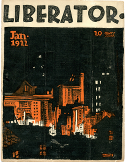
Issue 46: January 1922
Click here Viewing version (9.6mb).
Click here Higher Resolution/Printing version (31mb).
Note: First issue with editorials not written by Max Eastman; Eastman off masthead.
Next group of issues seem to have been edited by Mike Gold and skew heavily literary.
- “What Is Social Equality?” — Walter F. White — pp. 6-7.
- “The American Type” — Claude McKay — pp. 8-9.
- “Sacco and Vanzetti in Paris” — Ida O’Neil — pp. 10-11.
- “On to Harding, Then Home Again” — Michael Gold, drawings by William Gropper — pp. 14-20.
- “Migratory Workers’ Convention” — “A Special Correspondent” — pg. 25.
- “The Russian Idea” — Floyd Dell — pp. 26-27.
|  click thumbnail to see a higher resolution version of the cover art work (4.2mb) |
|
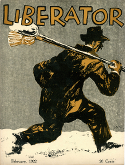
Issue 47: February 1922
Click here Viewing version (11.4mb).
Click here Higher Resolution/Printing version (25mb).
- “A Christmas Party” [WPA Convention] — Max Eastman — pp. 5-7.
- “The Vindication of Mr. Thomas” — Charles T. Hallihan — pp. 10-12.
- “The Hero” — Edmund Wilson Jr. — pg. 12.
- “Relief for Vienna” — Frederick Kuh, drawings by Adolph Dohn — pp. 21-22.
- “The Uncaging of Debs” — Charles P. Sweeney — pg. 22.
- “Two Conversations” — Max Eastman — pp. 27-28.
- “John Reed’s Book” — Nikolai Lenin — pg. 28.
- “Humor and the Revolution” [review of The Sense of Humor by Max Eastman] — Floyd Dell — pp. 29-31.
|  click thumbnail to see a higher resolution version of the cover art work (4.6mb) |
|
Issue 48: March 1922
Click here Viewing version (8.5mb).
Click here Higher Resolution/Printing version (17.7mb).
- “Wanted: Pioneers for Siberia!” — Michael Gold — pp. 5-8.
- “Poems by Class War Prisoners” — Charles Ashleigh, Ben Gitlow, Ralph Chaplin — pg. 9.
- “One Day’s Work” [Yuma, AZ] — George Granich — pp. 12-13.
- “Americanizing Haiti” — Martha Foley — pp. 16-17.
- “What is Lacking in the Theatre” — Claude McKay, drawings by Hugo Gellert — pp. 20-21.
|  click thumbnail to see a higher resolution version of the cover art work (2.1mb) |
|
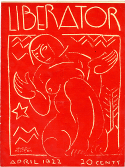
Issue 49: April 1922
Click here Viewing version (19.8mb).
Click here Higher Resolution/Printing version (9.1mb).
- “Garvey as a Negro Moses” — Claude McKay — pp. 8-9.
- “Theosophy on the High Seas: A Letter En Route from Max Eastman” — pp. 11-12.
- “A Letter from Mexico” — Maurice Becker — pp. 12-13.
- “Man , X His Mark: Comment on an Exhibit of Drawings by Boardman Robinson” — Robert Minor — pp. 20-21.
- “Thoughts of a Great Think” — Michael Gold — pp. 23-25.
|  click thumbnail to see a higher resolution version of the cover art work (2.5mb) |
|
Issue 50: May 1922
Click here Viewing version (8mb).
Click here Higher Resolution/Printing version (17.6mb).
- “Palm Sunday in the Coal Fields” — Michael Gold — pp. 5-9.
- “Let’s Get Them Out” [political prisoners] — Robert Minor — pp. 14-15.
- “Spring Sonnets” [poetry] — Claude McKay — pg. 16.
- “In a Southern Prison Camp” — Isaac H. Schwartz — pp. 25-27.
| 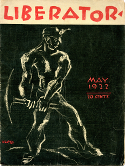 click thumbnail to see a higher resolution version of the cover art work (4.2mb) |
|
Issue 51: June 1922
Click here Viewing version (12.5mb).
Click here Higher Resolution/Printing version (36.5mb).
- “Down the Coast from Genoa” — Max Eastman, drawings by Sors and Crispi — pp. 5-8.
- “An Open Letter from Charles W. Wood to Hon Richard Enright and Hon. John F. Hylan” — pp. 9-11.
- “The Wobblies Raid on the Seamen’s Union” — Dick Orson — pp.12-14.
- “The Case of Nickolay Mansevich” — Stanley Boon — pp. 14-15.
- “Red Roses for Hillman” — Michael Gold — pp. 16-22.
- “Explanations and Apologies” — Floyd Dell — pp. 25-26.
- “Out of Texas” [lynching] — Lucy Maverick — pp. 28-30.
| 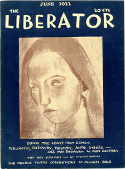 click thumbnail to see a higher resolution version of the cover art work (4.4mb) |
|
Issue 52: July 1922
Click here Viewing version (10mb).
Click here Higher Resolution/Printing version (27mb).
- “Class Struggle at Genoa” — Max Eastman — pp. 5-9.
- “The Descending Knife” [Centralia] — John Nicholas Beffel — pg. 10.
- “George Gorsz, Artist-Communist” — Hi Simons — pp. 28-29.
- “A Letter from Boardman Robinson” — pg. 29.
- “Onward, Christian Soldiers” — Lewis Gannett — pp. 30-32.
| 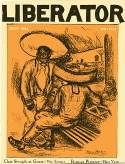 click thumbnail to see a higher resolution version of the cover art work (3.3mb) |
|
Issue 53: August 1922
Click here Viewing version (11.3mb).
Click here Higher Resolution/Printing version (27.7mb).
- “The Caucasus Under the Soviets” — John Dos Passos — pp. 5-9.
- “Two Critics of Russia” — Max Eastman — pp. 10-11.
- “Peace Reigns at Herrin” — Carl Haessler — pp. 13-14.
- “Birthright” — Claude McKay — pp. 15-16.
- “Why Wear Clothes?” [nudism] — Stuart Chase — pp. 24-25.
| 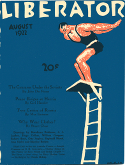 click thumbnail to see a higher resolution version of the cover art work (1.5mb) |
|
Issue 54: September 1922
Click here Viewing version (28.4mb).
Click here Higher Resolution/Printing version (12.5mb).
- “The Jesus-Thinkers” — Michael Gold — pp. 11-12.
- “Dogs and Shadows in Japan” — Gertrude Haessler — pp. 14-21.
- “For the Silent Defenders” [IWW] — Art Shields — pp. 22-23.
|
 click thumbnail to see a higher resolution version of the cover art work (1.5mb) |
|
Issue 55: October 1922
Click here Viewing version (9.4mb).
Click here Higher Resolution/Printing version (17.6mb).
Last Issue Listing Floyd Dell as “Executive Editor” on masthead.
- “Labor Liquidates Revolution” — J.B. Salutsky [J.B.S. Hardman] — pp. 5-8.
- “Words from a Calaboose” [MacNamara Affair] — Pierre Loving — pg. 14.
- “The ‘Jesus-Thinkers’” — Upton Sinclair — pg. 15.
- “Modern History in Michigan” [Bridgman Raid] — Stanley Boone — pg. 16.
- “Art in Starving Germany” — William Schack — pp. 20-21.
- “A Knife in the Back” [PSR Trial] — Karl Radek — pp. 27-29.
| 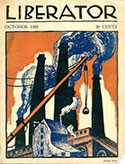 click thumbnail to see a higher resolution version of the cover art work (3mb) |
|
Issue 56: Nov.-Dec. 1922
Click here Viewing version (9.8mb).
Click here Higher Resolution/Printing version (20.9mb).
Lists Robert Minor and Joseph Freeman as
“Executive Editors” on masthead. Clear CP content.
- “Russia’s Embattled Liberators” — Eugene V. Debs — pg. 10.
- “We Want a Labor Party” — Robert Minor — pp. 11-15.
- “A Look at the Elections” — C.E. Ruthenberg — pp. 16-17.
- “Toward Amalgamation” — Stanley Boone — pp. 24-25.
- “Let’s Have Some Liberty” — Edward Pyle — pp. 26-28.
- “Jobbers in Justice” [West Virginia] — Karl Pretshold — pg. 29.
| 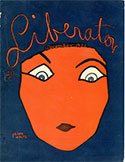 click thumbnail to see a higher resolution version of the cover art work (2.7mb) |
1923
A complete compilation for Volume 5, 1923 of the tables of contents click here
|
Issue 57: January 1923:
Click here Viewing version (12mb).
Click here Higher Resolution/Printing version (31.8mb).
- “The Red Cock” [art in Soviet Russia] — Alexander Chramoff — pp. 7-8.
- “The Skirmish in Cleveland” [CPPA Convention] — C.E. Ruthenberg — pp. 9-11.
- “British Labor Advances” — R.W. Postgate — pp. 12-13.
- “The Throne of the United States” [American empire] — Robert Minor — pp. 19-27.
- “Litany of the Revolution” [poem] — Arturo Giovannitti — pp. 29-31.
- “Fascismo” [Italy] — G. Cannata — pp. 32-33.
| 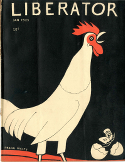 click thumbnail to see a higher resolution version of the cover art work (2.2mb)--> |
|
Issue 58: February 1923
Click here Viewing version (9.4mb).
Click here Higher Resolution/Printing version (27.6mb).
- “Poems by Simon Felshin” [political poetry] — pg. 7.
- “The Throne of the World” [world capitalism] — Robert Minor — pp. 8-11.
- “Communism in the Open Again” — C.E. Ruthenberg — pp. 12-14.
- “Moscow Art Theatre” — Alexander Chramoff — pp. 15-20.
- “At the Fourth Congress” [Comintern] — Rose Pastor Stokes — pp. 21-23.
- “B.V.D.’s” [ACW] — Ann Washington Craton — pp. 24-26.
- “Save Sacco and Vanzetti!” — Karl Pretshold — pg. 26.
- “Charlie in the Steel-Mills” [review of Steel: The Diary of a Furnace Worker by Charles Rumford Walker] — Floyd Dell — pp. 27-28.
|  click thumbnail to see a higher resolution version of the cover art work (2.5mb) |
|
Issue 59: March 1923
Click here Viewing version (8.4mb).
Click here Higher Resolution/Printing version (14.8mb).
- “Are the Communists Ready?” — Max Bedacht — pp. 8-10.
- “Courage” [Kansas miners] — Mary Heaton Vorse — pp. 11-13.
- “An Imperial Year” [England] — R.W. Postgate — pp.14-15.
- “An Open Challenge” [Bridgman trial] — C.E. Ruthenberg — pg. 16.
- “The Outline of Marriage” [part 1] — Floyd Dell — pp. 17-22.
- “Martin Anderson Nexo” — Ella Reeve Bloor — pg. 24.
|  click thumbnail to see a higher resolution version of the cover art work (3.5mb) |
|
Issue 60: April 1923
Click here Viewing version (12mb).
Click here Higher Resolution/Printing version (26.4 mb).
- “The Trial of William Z. Foster” [Bridgman] — Robert Minor — pp. 8-11.
- “The Socialist Theatre in Soviet Russia” — Alexander Chramoff — pp. 14-16.
- “The Bishop and the Senator” [William Montgomery Brown & Sen. R.F. Pettigrew] — J. Louis Engdahl — pg. 17.
- “The Outline of Marriage” [part 2] — Floyd Dell — pp. 20-24.
- “Kicking the Seats of Learning” [review of The Goose Step by Upton Sinclair] — Joseph Freeman — pp. 27-28.
|  click thumbnail to see a higher resolution version of the cover art work (2mb) |
|
Issue 61: May 1923
Click here Viewing version (14.5mb).
Click here Higher Resolution/Printing version (24.5mb).
- “The Kaiser’s Mr. Burns” — Robert Minor — pp. 8-14.
- “Michigan in the Muck” [Bridgman trial] — Eugene V. Debs — pg. 16.
- “Supersalesman for the Supernatural” [Arthur Conan Doyle] — Gertrude Marvin — pp. 17-18.
- “Answering Uncle Sam” — Scott Nearing — 19-21.
- “Follies of 1924” [contemporary politics] — Jay Lovestone — pp. 22-25.
- “The SP — Two Wings Without a Body” — John Pepper — pp. 23-24.
- “The Revolution Comes to Gravel Hill” [Bridgman trial] — Ralph Goll — pg. 25.
- “Pioneers” [William Z. Foster/TUEL] — Don Brown — pp. 27-28.
- “Makers of America” [foreign-born workers] — C.S. Ware — pp. 29-30.
|  click thumbnail to see a higher resolution version of the cover art work (5.7mb) |
|
Issue 62: June 1923
Click here Viewing version (9.5mb).
Click here Higher Resolution/Printing version (29.5mb).
- “Hugo Gellert — A Happy Rebel” — Don Brown — pg. 8.
- “Bon Voyage, Hillquit!” [Unity Convention of 2nd and 2-and-1/2 Internationals] — John Pepper — pp. 9-10.
- “Ruthenberg Convicted” [Bridgman trial] — Jay Lovestone — pp. 11-13.
- “The White Terror in Pittsburg” [WPA trial] —Don Brown — pp. 24-27.
- “The Same in Ohio” [police repression] — H.M. Wicks — pp. 20-21.
- “Howatt the Coaldigger” — J. Louis Engdahl — pg. 22.
- “The Lap of Luxury” — Scott Nearing — pp. 23-25.
- “The Outline of Marriage” [part 3] — Floyd Dell — pp. 26-28.
| 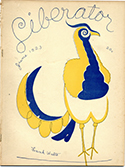 click thumbnail to see a higher resolution version of the cover art work (2mb) |
|
Issue 63: July 1923
Click here Viewing version (11.3mb).
Click here Higher Resolution/Printing version (27.3mb).
- “The Declaration of Independence of the American Working Class” — John Pepper — pp. 8-10.
- “Role of the Workers Party” — C.E. Ruthenberg — pp. 14-15.
- “We Get Arrested a Little” — Upton Sinclair — pp. 16-22.
- “Moscow’s Answer” [Curzon Note] — Max Eastman — pp. 23-24.
- “Introducing John Farmer” — Hal Ware — pp. 25-27.
- “The Outline of Marriage” [part 4] — Floyd Dell — pp. 28-30.
| 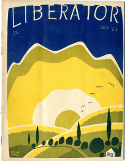 click thumbnail to see a higher resolution version of the cover art work (2.3mb) |
|
Issue 64: August 1923
One version only available:
Click here Viewing version (12.4mb).
- “The Silver Bugle” [political prisoners] — Robert Minor — pg. 3.
- “President Harding Makes a Swing Around the Circle” — C.E. Ruthenberg — pp. 8-9.
- “The Workers Party and the Federated Farmer-Labor Party” — John Pepper — pp. 10-14.
- “Petrograd: May Day, 1923” [poem] — Claude McKay — pg. 15.
- “Intellectual Life in Russia” — Victor Serge — pp. 20-21.
- “Ten Acres of Hell” [Leavenworth] — Harrison George — pp. 22-23.
- “On Joining the World Court” — Scott Nearing — pp. 24-26.
- “The Outline of Marriage” [part 5] — Floyd Dell — pp. 29-31.
- “Out of the Shadows” [review of the Soviet film The Fifth Year] — Nancy Markoff — pg. 32.
| 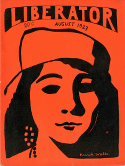 click thumbnail to see a higher resolution version of the cover art work (1.5mb) |
|
Issue 65: September 1923
Click here Viewing version (10.8mb).
Click here Higher Resolution/Printing version (32mb).
- “At Last! A Workers’ Daily Paper” [Daily Worker] — editorial — pg. 7.
- “Facing the Third American Revolution” — John Pepper — pp. 9-12.
- “Treasure Islands” [Philippines] — Jay Lovestone — pp. 10-20.
- “The Northwest Comes of Age” [Washington FLP] — Joel Shoemaker — pg. 20.
- “The Yellow Streak in Coal” — J. Louis Engdahl — pp. 23-25.
- “The Outline of Marriage” [part 6] — Floyd Dell — pp. 27-28.
- “The Last of the Great Parlor Socialists” [H.G. Wells] — James Fuchs — pp. 29-31.
| 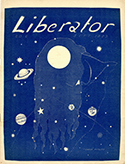 click thumbnail to see a higher resolution version of the cover art work (2.8mb) |
|
Issue 66: October 1923
Click here Viewing version (11mb).
Click here Higher Resolution/Printing version (21mb).
- “Shall We Assume Leadership?” — John Pepper — pp. 9-11, 28.
- “Literature and the Machine Age” [part 1] — Floyd Dell — pp. 12-15.
- “Romance in Journalism” [Chicago Daily Socialist] — J. Louis Engdahl — pp. 16-17.
- “A Small Prison Within a Large Prison” [Leavenworth] — Harrison George — pp. 22-23.
- “The Machine Shop of the Revolution” [TUEL] — Earl R. Browder — pp. 27-28.
- “As the Anarchists Begin to See It” [Soviet Russia] — I.M. Heizmann et al. — pp. 30-31.
|  click thumbnail to see a higher resolution version of the cover art work (2.3mb) |
|
Issue 67: November 1923
Click here Viewing version (9.7mb).
Click here Higher Resolution/Printing version (24.6mb).
- “The AF of L Convention” — William Z. Foster — pp. 7-9.
- “The New Wave of World Revolution” — John Pepper — pp. 10-13.
- “Mr. Hughes Surprises Himself” [Mexico] — J. Ramirez — pp. 20-22.
- “Literature and the Machine Age” [part 2] — Floyd Dell — pp. 23-25.
- “How Goes the Labor Party?” — Joseph Manley — pp. 26-28.
- “Our Brother Bartolomeo” [review of The Story of a Proletarian Life by Bartolomeo Vanzetti] — Robert Minor — pp. 29-30.
|  click thumbnail to see a higher resolution version of the cover art work (3mb) |
|
Issue 68: December 1923
Click here Viewing version (12mb).
Click here Higher Resolution/Printing version (24.3mb).
- “The Noise that Congress Makes” — Jay Lovestone — pp. 6-9.
- “A Permanent Revolution” [Soviet Russia] — Max Eastman — pp. 10-12.
- “Pro-Proletarian Art in Mexico” — Frederic W. Leighton — pp. 12-15.
- “A Dividend Out of Russia” [RAIC] — Jessica Smith — pp. 16-17.
- “The United-Front-in-Spite-of-Yourself” — Upton Sinclair — pg. 24.
- “Elmer Graham” [IWW fiction] — Miriam Allen de Ford — pp. 25-26.
- “Literature and the Machine Age” [part 3] — Floyd Dell — pp. 27-29.
|  click thumbnail to see a higher resolution version of the cover art work (1.8mb) |
|
Issue 69: January 1924
Click here Viewing version (10mb).
Click here Higher Resolution/Printing version (26.5mb).
- “The Second Wave of International Revolution” — G. Zinoviev — pp. 9-11.
- “The Counter-Revolution in Mexico” — J. Ramirez — pp. 12-13.
- “Liberty in Russia” — William M. Kruse — pp. 14-15.
- “The Can-Opener” [Leavenworth] — Harrison George — pp. 16-17.
- “From Sing Sing to Dublin” — Jack Carney — pp. 20-22.
- “A Bolshevik Library” — Louis Fischer — pp. 23-25.
- “Literature and the Machine Age” [part 4] — Floyd Dell — pp. 27-29.
|  click thumbnail to see a higher resolution version of the cover art work (1.8mb) |
|
Issue 70: February 1924
Click here Viewing version (8.2mb).
Click here Higher Resolution/Printing version (19.5mb).
- “Lenin” — editorial — pg. 5.
- “The Black Ten Millions” [part 1] — Robert Minor — pp. 7-9.
- “French Nationalism in 1923” — Charles Rappoport — pg. 10.
- “France is Next” — Scott Nearing — pg. 11.
- “The Stability of Russian Finance” — Scott Nearing — pg. 11.
- “The Revolutionary Party” [WPA] — C.E. Ruthenberg — pp. 12-13.
- “Inferno 1924: The Pennsylvania Iron Region” — Hugo Gellert — pp. 14-15.
- “The Politico-Military Horizon” — Jay Lovestone — pp. 16-20.
- “A New Page in Mexico’s History” — Bertram D. Wolfe — pp. 21-23.
- “Is It Possible to Fix a Definite Time for a Counter-Revolution or a Revolution?” — Leon Trotsky — pp. 24-26.
- “Literature and the Machine Age” [part 5] — Floyd Dell — pp. 29-31.
| 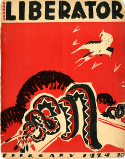 click thumbnail to see a higher resolution version of the cover art work (2.2mb) |
|
Issue 71: March 1924
Click here Viewing version (9mb).
Click here Higher Resolution/Printing version (20mb).
- “Teapot Dome” — Jay Lovestone — pp. 5-8.
- “Imperial Hari-Kiri” [England] — Scott Nearing — pg. 9.
- “‘Third Party’ or Farmer Labor Party?” — C.E. Ruthenberg — pp. 10-11.
- “Simon Legree on the Night Shift” [Oklahoma KKK] — Harrison George — pp. 12-13.
- “The Black Ten Millions” [part 2] — Robert Minor — pp. 15-17.
- “The Present Situation in the Communist Party of Germany” — A. Thalheimer — pp. 20-21.
- “Theses on the October Defeat and the Present Situation” — A. Thalheimer and H. Brandler — pp. 21-22.
- “Outline of Theses on the Political Situation and on the Situation of the Party” [Germany] — pp. 22-23.
- “Theses on the Tactics of the October Retreat and on the Next Tasks of the CP of Germany” — pp. 24-26.
- “Literature and the Machine Age” [part 6] — Floyd Dell — pp. 27-29.
- “Third Degree” [poem] — Michael Gold — pg. 29.
|  click thumbnail to see a higher resolution version of the cover art work (1.9mb) |
|
Issue 72: April 1924
Click here Viewing version (8.8mb).
Click here Higher Resolution/Printing version (23mb).
|
|
Issue 73: May 1924 (Note: misnumbered as No. 74 in print)
Click here Viewing version (9.7mb).
Click here Higher Resolution/Printing version (22.2mb).
- “The Story of May Day” — Robert Minor — pp. 5-8.
- “The Storm is Coming” — Max Bedacht — pp. 9-11.
- “‘Dear’ Government” — Scott Nearing — pg. 12.
- “Karl Marx: The Revolutionist” — Max Shachtman — pp. 13-14.
- “What Are We Doing to Honduras?” — Bertram D. Wolfe — pp. 15-16.
- “The Crusade Against the Foreign-Born” — Alexander Bittelman — pp. 17-20.
- “The Life and Work of Lenin” [part 2] — Karl Radek — pp. 21-26.
- “Literature and the Machine Age” [part 8] — Floyd Dell — pp. 27-28.
- “An Irrelevant Saint” [review essay on Gandhi] — C.E. Ruthenberg — pg. 30.
| 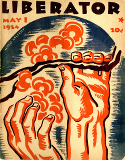 click thumbnail to see a higher resolution version of the cover art work (2.5mb) |
|
Issue 74: June 1924
Click here Viewing version (8.5mb).
Click here Higher Resolution/Printing version (15.3mb).
- “The Birth of the Working Class Soul” — C.E. Ruthenberg — pp. 5-6.
- “The Dawes Plan” — Scott Nearing — pg. 7.
- “The Wisdom of Lenin” [part 1] — Max Eastman — pp. 8-12.
- “The Elections in Germany” — Max Bedacht — pp. 13-14.
- “The Lost Legion Found — by its Jailors” [Leavenworth] — “General Prisoner No. ___” — pp. 16-17.
- “Literature and the Machine Age” [part 9] — Floyd Dell — pp. 25-28.
- “The Irish Lenin” [review of James Connolly: His Life Work and Writing by Desmond Ryan] — T.J. O’Flaherty — pg. 29.
| 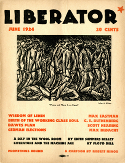 click thumbnail to see a higher resolution version of the cover art work (2.3mb) |
|
Issue 75: July 1924
Click here Viewing version (10.5mb).
Click here Higher Resolution/Printing version (23.7mb).
- “How the Little Brown Brother Became the Little Yellow Devil” — Max Bedacht — pp. 5-7.
- “Sketches Made at the Republican Convention” — Robert Minor — pg. 8.
- “Prosperity Blows Up” — Jay Lovestone — pp. 9-12.
- “Leading the World Revolution” [Comintern] — Alexander Bittelman — pp. 13-15.
- “Workers and Farmers on the Mark” [FLP] — C.E. Ruthenberg — pp. 16-21.
- “The Wisdom of Lenin” [part 2] — Max Eastman — pp. 24-26.
- “Literature and the Machine Age” [part 10] — Floyd Dell — pp. 27-29.
| 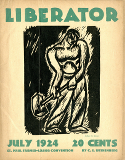 click thumbnail to see a higher resolution version of the cover art work (2mb) |
|
Issue 76: August 1924
Click here Viewing version (12mb).
Click here Higher Resolution/Printing version (18.2mb).
- “The Convention of the Conference for Progressive Political Action” — William Z. Foster — pp. 7-9.
- “Coming — The Bread Line” — Jay Lovestone — pp. 10-12.
- “The Economic Anatomy of Five Conventions” — Max Bedacht — pp. 13-15.
- “The Communist Campaign for Class Action” — C.E. Ruthenberg — pg. 16.
- “Let’s Make the Issue Clear-Cut” [FLP] — Duncan McDonald — pg. 17.
- “The Negro Finds His Place — and a Sword” — Robert Minor — pp. 20-25.
- “Will the IWW Fight Decadence?” — Harrison George — pp. 26-28.
- “Fascist Violence and Revolutionary Violence” — Charles Rappoport — pg. 29.
- “Literature and the Machine Age” [part 11] — Floyd Dell — pp. 30-33.
| 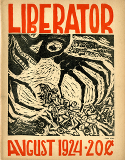 click thumbnail to see a higher resolution version of the cover art work (2.2mb) |
|
Issue 77: September 1924
Click here Viewing version (9.3mb).
Click here Higher Resolution/Printing version (35.1mb).
- “The Story of a Spark” [Daily Worker] — J. Louis Engdahl — pp. 7-10.
- “What Don Quixote LaFollette is Fighting” — C.E. Ruthenberg — pp. 11-13.
- “The Face of the Earth After the War” — Karl Radek — pp. 14-17.
- “The War of the Oil Giants” — Harris Wescott — pp. 18-23.
- “The Bishop and the Bolsheviks” [William Montgomery Brown] — P. Krasikoff — pp. 24-27.
- “Literature and the Machine Age” [part 12] — Floyd Dell — pp. 28-30.
- “The Philosopher Faces the Facts” [Bertrand Russell] — Max Bedacht — pg. 32.
| 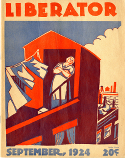 click thumbnail to see a higher resolution version of the cover art work (2.3mb) |
|
Issue 78: October 1924
Click here Viewing version (10.8mb).
Click here Higher Resolution/Printing version (32mb).
- “Announcing The Workers Monthly” — pg. 5.
- “Growth” [on The Liberator and The Workers Monthly] — Robert Minor — pp. 6-7.
- “The Dismantling of Democracy” — Max Bedacht — pp. 8-10.
- “The Death of the Socialist Party” — J. Louis Engdahl — pp. 11-14.
- “The Cradle of the Giants” [YWL] — Max Shachtman — pp. 15-16.
- “The Handkerchief on Garvey’s Head” — Robert Minor — pp. 17-25.
- “Reorganization of the Workers Party” [with Comintern resolution] — C.E. Ruthenberg — pp, 26-27.
- “Literature and the Machine Age” [part 13] — Floyd Dell — pp. 28-29.
- “England, 1650 — Russia, 1924” — Max Bedacht — pg. 30.
| 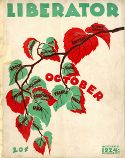 click thumbnail to see a higher resolution version of the cover art work (2.1mb) |
Last Updated On 20 December 2014
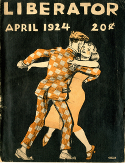 click thumbnail to see a higher