Wa
Wagenknecht, Alfred (1881–1956)
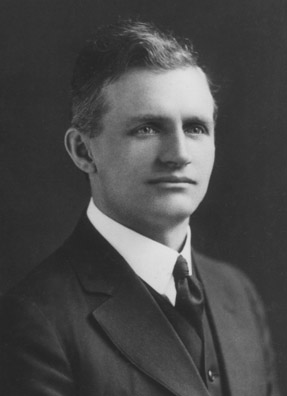 Alfred Wagenknecht (August 15, 1881 — August 26, 1956) was an American Marxist who played a critical role in the establishment of the American Communist Party in 1919.
The Socialist Years (1904-1919)
Alfred Wagenknecht, called “Wag” by many of his friends, was born August 15, 1881 in Goerlitz, Germany [1], the son of a shoemaker. The family emigrated to the United States in 1884, and thus the German-born Wagenknecht essentially grew up as an American, living in Cleveland before departing as a young man for Wasington state, on the West Coast. The young Wagenknecht was drawn to radical politics at an early age, serving as the Press Agent for the Seattle Local of the Socialist Party of America (SPA) in 1904, one year before his marriage to Hortense Allison, sister of his party comrade Elmer Allison. Wagenknecht was prominent in the ongoing free speech fights which Local Seattle had with city officials over the right to speak in public and hold meetings on city streets and sidewalks.
As was the case for many rank-and-file party members of the day, Wagenknecht was a regular candidate for public office on the Socialist ticket, running for US Congress in 1906, for Seattle Comptroller in 1908, and for Congress again in 1912. He was also a delegate from Washington state to the 1908 Convention of the Socialist Party.
In July 1913, Wagenknecht became Editor of the Everett, Washington Socialist weekly The Commonwealth. Shortly thereafter, Wagenknecht went to work for the National Office of the Socialist Party of America for the first time, serving as a National Organizer. In 1914, he was elected to the governing National Executive Committee of the Socialist Party for the first time. After his stint in Chicago came to a close, Wagenknecht moved his family back to Ohio, where he was elected State Secretary of the Socialist Party of Ohio in 1917, serving through 1919. He was also a delegate to the pivotal 1917 Emergency National Convention of the SPA, held at the Planters’ Hotel in St. Louis, Missouri, at which the St. Louis Program against the war in Europe was adopted.
After American entry into the war, Wagenknecht’s unyielding antimilitarism brought him into conflict wth the law. State Secretary Wagenknecht was indicted along with Local Cuyahoga County head C.E. Ruthenberg and Ohio State Organizer Charles Baker for allegedly obstructing the draft. The trio were tried together and found guilty and sentenced to 1 year in the State Penitentiary on July 21, 1917. This decision was upheld by the US Supreme Court on Jan. 15, 1918, and the three were not released until after completion of the sentence (less time off) on Dec. 8, 1918. Alfred Wagenknecht, c. 1918
Upon his release, “Wag” was elected to the National Executive Committee of the Socialist Party and worked for National Office running the party’s Propaganda Department. He was an early and fierce adherent of the Left Wing Manifesto authored by Louis C. Fraina and was active in the Left Wing Section of the Socialist Party, the organized faction seeking to “win the Socialist Party for the Left Wing.” Wagenknecht ran for National Executive Secretary of the Socialist Party in 1919 and was the leading vote-getter in the race, which was ultimately annulled by the outgoing NEC on account of purported voting irregularities by the language federations of the party. Wagenknecht and the Left Wing attempted to establish themselves as a parallel National Executive Committee despite the outgoing NEC’s refusal to officially tabulate the vote, and the “new NEC” met one time in Chicago in August in an attempt to assert authority over the party apparatus, with Wagenknecht declaring himself “Executive Secretary Pro Tem.” This effort was rebuffed by sitting Executive Secretary Adolph Germer and the party’s Regular faction, however.
The Communist Years (1919-1956)
Wagenknecht was not eligible to participate in the seminal 1919 Emergency National Convention of the SPA owing to the expulsion of the Socialist Party of Ohio from the party for their endorsement of the Left Wing Manifesto, which was portrayed by the Regular-dominated outgoing NEC as an automatic violation of the party constitution. Consequently, Wagenknecht cleverly rented a room downstairs from the SPA’s convention at Machinists’ Hall in Chicago and ran a parallel convention to the official one upstairs — a gathering which was joined by a steady stream of disgruntled Left Wing delegates bolting from the official gathering. Wagenknecht presided over this alternative convention, which on Aug. 31, 1919, declared itself to be the founding convention of the Communist Labor Party of America. This convention elected Wagenknecht as National Secretary of the CLP, a role which he maintained throughout the organization’s brief history.
The CLP was devastated by the raids of the US Department of Justice headed by A. Mitchell Palmer and his Special Assistant, J. Edgar Hoover, coordinated actions which began in the fall of 1919 and reached their zenith with a mass operation conducted during the evening of Jan. 1/2, 1919. The CLP was driven underground, local organizations broken up into secret “groups” of no more than 10 members who met furtively, using pseudonyms and attempting to avoid detection by the authorities. Wagenknecht was known variously as “Paul Holt,” “A.B. Mayer,” “A.B. Martin,” and “U.P. Duffy” during the “underground years” of 1920-1923.
In April of 1920, Wagenknecht’s former prisonmate, turned Executive Secretary rival, C.E. Ruthenberg left the Communist Party of America (CPA) along with a number of co-thinkers and a big portion of the organization’s cash. This Ruthenberg-CPA and Wagenknecht’s CLP finally determined to achieve the organizational unity demanded by the Communist International at a secret convention held at Bridgman, Michigan at the end of May 1920. This gathering determined to retain Wagenknecht as Executive Secretary of the new organization, called the United Communist Party (UCP), assigning the important role of Editor of the party’s official newspaper, The Communist, to Ruthenberg. Wagenknecht also served on the UCP’s Editorial Committee and on the 3 member Unity Committee which continued to negotiate a merger agreement with the remaining CPA organization, headed by Charles Dirba. Unity with this group was finally forged at a May 1921 secret convention held at the Overlook Mountain House hotel near Woodstock, New York. Confusingly, this new unified organization retained the name “Communist Party of America,” the same moniker shared by the Dirba majority and the Ruthenberg minority organizations.
The merger of the UCP meant the end of Wagenknecht’s tenure as an Executive Secretary. From June 1921, Wagenknecht served as the Manger of the unified CPA’s “legal” weekly newspaper, The Toiler, with Wagenknecht’s brother-in-law, Elmer Allison editing the publication. In 1922, a legal “mass organization” called the Friends of Soviet Russia was established by the unified CPA, and Wagenknecht was named by the CEC of the party to head it. He also sat on the Central Executive Committees of the (underground) unified CPA and the party’s “Legal Political Party” — the Workers Party of America (WPA) — from 1922 to 1923, when the underground party was finally dissolved. Thereafter, Wagenknecht was made the District Organizer for the tiny Wilkes Barre district of the WPA, with this job beginning in May of 1923.
In 1924, Wagenknecht worked as a “Director of Special Campaigns” for the WPA, managing the fund-raising drive for The Daily Worker. Wagenknecht seems to have been difficult for both the Pepper-Ruthenberg-Lovestone and the Foster-Cannon-Lore factions and was shipped off to the Philippines to organize trade unions on behalf of the Red International of Labor Unions (RILU) late in 1924.
Later, Wagenknecht turned his hand to drama, producing and co-starring in The Passaic Textile Strike, a semi-fictional account of the 13-month strike of 16,000 textile workers, initially led by Wagenknecht and other American Marxist and Communist leaders.
Wagenknecht separated from his wife Hortense in 1930 and was finally divorced in January of 1948.
In 1933, Wagenknecht served as the Executive Secretary of the National Committee to Aid Victims of German Fascism, a CP-sponsored “mass organization.” He was the State Chairman of the Communist Party in Missouri from 1938 to 1941 and in Illinois from 1941 to 1945. Wagenknecht remained a Communist Party loyalist for the rest of his days, dying on Aug. 26, 1956 in Illinois) and honored at his passing with a full-page photograph in Political Affairs, the theoretical monthly of the Communist Party USA.
Written by Tim Davenport
Walcher, Jacob (1887-1970)
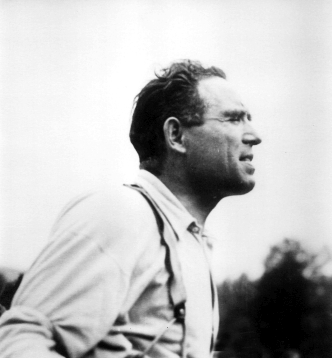 Trade unionist active in SPD youth organisation, opposed war in 1914 and joined Spartakusbund. Founder member and leader of KPD. Member of Profintern Executive 1924-26. Expelled from KPD with Thalheimer and Brandler in 1928. Founder member of KPO, from which he was expelled in 1932 after proposing unity with SAP, a left split from SPD. Became leader of SAP in exile after 1933, held unity discussions for SAP with Trotsky 1934, but political differences were too great. Exile in USA during war, returned to Germany 1946, decided to live in GDR, where he joined KPD and then SED, purged 1951, rehabilitated 1956.
Walesa, Lech (b. 1943)
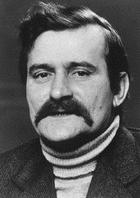 Worked in Gdansk shipyards from 1967 as electrical mechanic; member of 1970 strike committee which met Gierek in January 1971; over following decade bore a sense of guilt over death of four workers at this time; member of works committee at shipyards until sacked in 1976 for criticising management; in Dec 1978 and 1979 organised meetings commemorating workers killed in 1970; in 1979, joined the inter-factory strike committee to seek political rights and wage increases. Selected to lead the occupation of Lenin Shipyard in August 1980, leading to founding of Solidarity. As chairman of Solidarity Walesa kissed the Pope’s hand, called for ’free enterprise’, and openly greeted Ronald Reagan and Margaret Thatcher as friends. Arrested when martial law was instituted in December 1981 and jailed until November 1982. He led the negotiations with the government in February 1989 leading to the June 1989 elections in which Soldarity swept the board. In December 1990, Lech Walesa became President in an election marked by anti-Semitism. Walesa commented: ’Yes, I am still a capitalist and shall remain so. But I want to be an intelligent capitalist who has his eye on the long term’. His trail blazing of Polish capitalism, like all other attemps of capitalism after the collapse of Stalinism, was an immense failure. He lost the elections in 1995 by one percent of the vote – in 2000, he and his party attained less than one percent of the total vote.
Wallace, Henry (1888-1965) .
US Vice-president during F. F. Roosevelts third term. Wallace opposed Truman’s cold war anti-Soviet campaign, wanted a deal with Stalin. Stood in 1948 elections as presidential candidate of the Progressive Party. Wallace was strongly backed by the Communist Party and CP-controlled unions. Later Wallace left the Progressive Party and backed the US intervention in Korea.
Wallon, Henri (1879-1962)
 Born in France in 1879. In 1902, he graduated in philosophy from the École Normale Supérior, and in 1908 received his degree in medicine. He lived in a period of marked social instability and political turbulence. In 1914 he was doctor in the French army, spending some months at the front. Contact with brain injuries among veterans caused Wallon the review the knowledge of neurology he had developed earlier in work with mentally disabled children.
Up till 1931, he was a doctor in psychiatric institutions, but in the meantime, he continued to consolidate his interest in child psychology. During the Second World War, he was active in the French Resistance, was wanted by the Gestapo, and had to live underground.
Between 1920 and 1937, Wallon was the person in charge of conferences on the child psychology at the Sorbonne and other universities. In 1925 he established a laboratory dedicated to research and care of mentally disabled children. In 1925 he published his doctoral thesis on “The Disturbed Child.” This initiated a period of intense work on child psychology. His last book on this subject was Origins of the thought in the child, 1945.
In 1931, he traveled to Moscow and was invited to join the “Circle of New Russia,” a group formed to attract intellectuals to study of the dialectical materialism and its application in various fields of science. In 1942, he joined the Communist Party, of which he already was a sympathizer, and he remained connected to the Communist Party for the remainder of his life.
In 1948, he launched the magazine Infancy, dedicated to publishing research on child psychology and education.
See Henri Wallon Archive,
Walras, Léon (1834-1910)
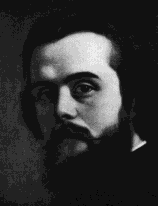 French-born economist who was one of the first to propound a comprehensive mathematical analysis of general economic equilibrium.
In 1865, Walras and Léon Say began a bank for producers’ cooperatives which failed in 1868. In 1870, Walras was appointed to the chair of political economy at the Academy of Lausanne, Switz. With Elements of Pure Economics (1874), Walras is generally credited with having founded the "Lausanne school" of economists later led by Vilfredo Pareto.
Walras applied to the economic universe techniques for treating systems of simultaneous equations that were well known in classical mechanics. Assuming a "regime of perfectly free competition," Walras constructed a mathematical model in which productive factors, products, and prices automatically adjust in equilibrium.
Walras also postulated reforms that he conceived to be necessary for the effective functioning of the system of free enterprise, notably land nationalization and modification of the gold standard.
Wang Ching-wei (1884-1944)
Leader of the Left Kuomintang and the government in industrial Wuhan whom the Communist International and the Communist Party supported after the Chiang Kaishek fiasco.
Warren, Fred (1872-?)
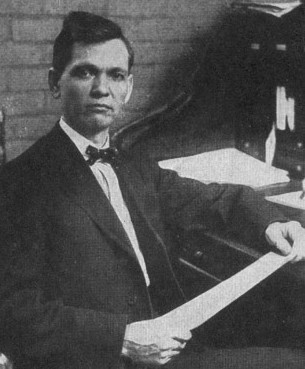 Managing editor of The Appeal to Reason, the biggest American radical newspaper of the period 1900-1917.