Chinese Communism:
Who’s Who
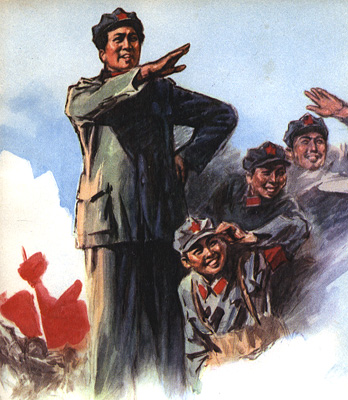
THE CHINESE COMMUNIST PARTY
The Chinese Communist Party (officially the Communist Party of China) emerged from the work of communist nuclei established in Shanghai, Beijing, Changsha, Wuhan, Jinan, Guangzhou, Japan and France around 1920. The Shanghai group established a journal, "The Communist", and published, among other things, a translation of Marx and Engels' Manifesto of the Communist Party.
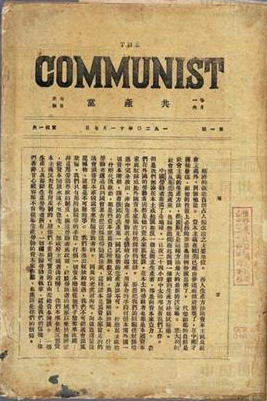 |
| Issue no. 1, 7 November 1920 |
Through the efforts of Chen Duxiu and Li Dazhao a conference was arranged for 23-31 July 1921 in Shanghai. That assembly, regarded as the First National Conference of the CCP, officially established the Party, adopted a party program, and a Resolution on the Present Tasks. Chen Duxiu was elected Party Secretary.
The 12 delegates to the I National
Congress of the CCP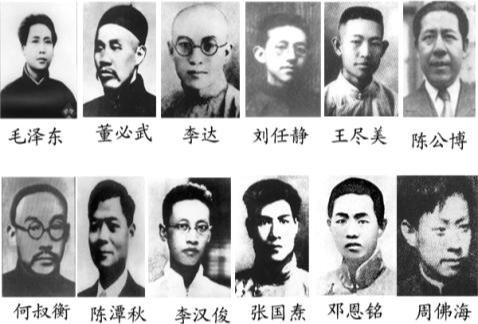
|
| (top, from L to R) Mao Zedong, Dong
Biwu, Li Da, Liu Renjing, Wang Jinmei, Chen Gongbo; (bottom, from L to R) He Shuheng, Chen Tanqiu, Li Hanjun, Zhanng Guotao, Deng Enming, Zhou Fohai |
The Party suffered heavy losses at the hands of the Guomindang in 1926-27 and a new party was built by Mao Zedong, and Zhou Enlai. The new CCP consolidated its leadership and cadre during the Long March, 1934-37, and after the defeat of the Japanese was able to drive out the Guomintang and in 1949, declared the People's Republic of China.
Xinhua
The Xinhua News Agency was started in 1931 as the Red China New Agency, and its name was changed in 1937. When the Communists took power in China, the agency represented the Chinese Communist Party in countries and territories with which it had no diplomatic representation. Xinhua is the official press organ of the People's Republic China and has long been regarded as the "eyes and tongue" of the Party. It is subordinate to the Council of State and the CCP's departments of Public Information and Propaganda. It issues its bulletins in eight languages around the world: Chinese, English, Spanish, French, Russian, Portuguese, Arabic and Japanese.
Renmin Ribao (Jen-min Jih-pao)
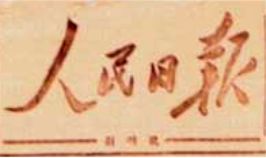
Published in Beijing since 1949, the "People's Daily" is the mouthpiece of the CCP Central Committee. It is China's main national daily newspaper, and in its foreign-language editions it , for many years, offered some of the few glimpses outsiders had into what was going on in China and inside the CCP. During the Great Proletarian Cultural Revolution Renmin Ribao's editorials were regarded as the authoritative voice of the Party and the government. Repeated mention in its pages of a leader, public figure, organization, idea, or campaign, was seen as as sign of official favor. Likewise, any criticism that appeared, however slight, was seen as a sign that one's star was dimming.
Hongqi
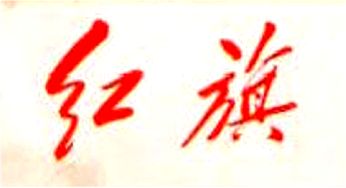
Hongqi ("Red Flag") was launched during the Great Leap Forward in 1958. The journal was the CCP Central Committee's main theoretical organ. During the Great Proletarian Cultural Revolution, Hongqi, along with Renmin Ribao and the People's Liberation Army's newspaper, became part of the influential "two dailies, one magazine" propaganda machine controlled by Chen Boda and Mao Zedong's allies in the CCP. The last issue of Hongqi was published on 15 June 1988.
Beijing Review (Pekíng Review)

Official weekly of the Chinese government aimed at foreign readers. It began publishing on 4 March 1958 in order to "provide timely, accurate, first-hand information on economic, political and cultural developments in China, and her relations with the rest of the world." The English edition was followed in 1963 by editions in Spanish, French, and Japanese, and in 1964 by a German edition. It ceased publication in March of 2004, and was supplanted by new online-only version. Archive
EARLY CHINESE COMMUNISTS
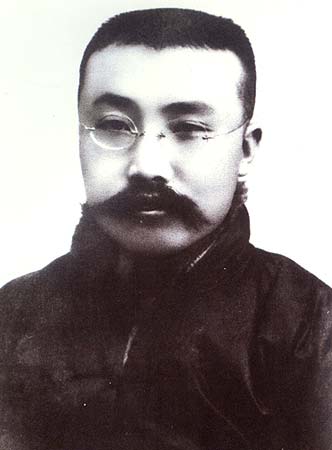
 Li Dazhao (Li Ta-chao)
(1888-1927)
Co-founder of Chinese Communist Party. Among the first of the Chinese intellectuals who supported the Bolshevik government in the USSR. One of the earliest and most prominent influences on Mao
Zedong.
(Full biography)
"Li Ta-chao, A Founder of the Chinese Communist Party," a 1953 article by Tsinghua University Professor Liu Nung-chao
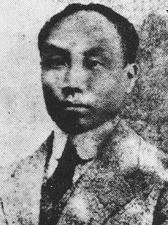 Chen
Duxiu (Chen Tu-hsiu)
Chen
Duxiu (Chen Tu-hsiu) 
(1879-1942) Co-founder of Chinese Communist Party. Joined the International Left Opposition after leaving the CCP in 1927. Considered the founder of Chinese Trotskyism. (Full biography) Archive
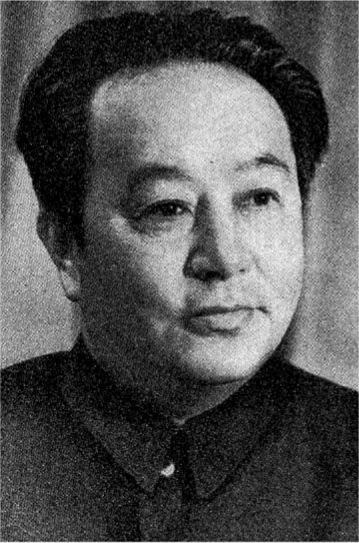
Wang Ming
(1904-1974) Senior leader of the early CCP and a major political rival of Mao Zedong during the 1930s, opposing what he saw as Mao's nationalist deviation from the Comintern and from orthodox Marxist-Leninist lines. He China left for medical treatment in the USSR in the 1950s and remained an exile there until his death. Archive
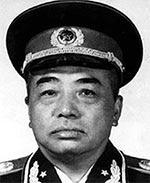 Peng
Dehuai (Peng Te-huai)
Peng
Dehuai (Peng Te-huai)
(1898-1974) A prominent CCP military leader since 1928, he successfully defended the Jiangxi Soviet, participated in the Long March, and commanded Chinese troops in the Korean War. He served as China's Defense Minister from 1954 to 1959. He clashed with Mao over Mao’s personality cult and economic policies associated with the Great Leap Forward, which led to Peng being labeled as a leader of an "anti-Party clique” and tortured during the Cultural Revolution. He was posthumously rehabilitated in 1978. Archive
______________
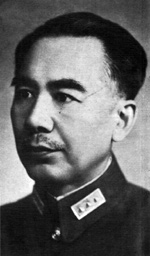
Sheng Shicai
(1895-1970) Warlord and Military Governor of Xinjiang. He favored the Soviet Union and implemented Soviet-inspired policies in Xinjiang during his tenure (1933-1944). He joined the Communist Party of the Soviet Union in 1938. He was never close to the Chinese Communist Party, and in fact purged and executed many of its cadre in Xinjiang in 1943. He later served as Minister of Agriculture and Forestry for the Nationalist government. He fled to Formosa with the rest of the Kuomintang in 1949. Archive
______________
THE CHINESE LEFT OPPOSITION
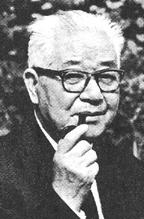
Peng Shuzi (Peng Shu-tse)
(1896-1983) Peng Shuzi joined the Socialist Youth League in 1920 and then attended the University of the Toilers of the East in Moscow. Joining the Chinese Communist Party in 1923 while still in Moscow, he ended up being elected to the Political Bureau of the CCP by 1925. Opposing the disastrous Comintern policies imposed on the CCP by Moscow, he joined with Chen Duxiu in supporting of the Left Opposition. He was forced to leave China in 1948. (Full biography) Archive
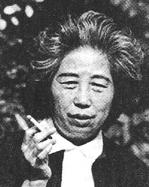 Chen
Bilan (Ch'en Pilan)
Chen
Bilan (Ch'en Pilan)
(1902-1987) Joined the Young Socialist League and the CCP as a student in Wuhan in 1922. Chosen in 1924 by the CCP Central Committee to attend the University of the Toilers of the East in Moscow. Returning to China in August 1925, she took part in the revolutionary upheaval of 1925-27 and was a member of the Standing Committee of the CCP's Shanghai Regional Committee and secretary of the regional committee's women's bureau. Ch'en was a founding member of the Chinese Trotskyist movement in 1929 and was elected to the Political Bureau of the Communist League of China in 1946. She went into exile in 1948. (Full biography) Archive

Wang Fanxi (Wang Fan-hsi)
Joined the CCP, then an illegal organisation, in 1925. In 1927, was sent to Moscow to study at the Communist University of the Toilers of the East, where he became a supporter of Trotsky and the International Left Opposition. On his return to China, Wang worked for the Communist Party and became a leading member of the Trotskyist October Group, and then the Chinese Left Opposition. He was jailed for most of the period from 1931 and 1937, and was expelled from the CCP for his views. He left China in 1949. Archive
______________
THE MAOISTS
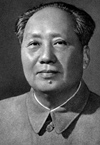 Mao Zedong (Mao Tse-tung)
(1893-1976) First Chairman of the People's Republic of China. Served as CCP Chairman until his death. (Full biography) Archive
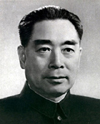
Zhou Enlai (Chou En-lai)
(1898-1976) Founded European branch of CCP, veteran of wars against Kuomintang and Japanese forces. Premier of People's Republic of China from from its founding in 1949 until his death. (Full biography) Archive
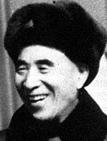 Lin Biao (Lin Piao)
(1907-1971) Veteran of wars against Kuomintang and Japanese forces. Served in Politburo, as Vice-Chairman and as Defense Minister. (Full biography) Archive
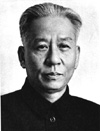
Liu Shaoqi (Liu Shao-chi)
(1898-1969) Veteran of wars against Kuomintang and Japanese forces. Former Chairman of People's Republic of China and slated to succeed Mao until Liu's purge in 1968. Posthumously rehabilitated after Mao's passing. (Full biography) Archive
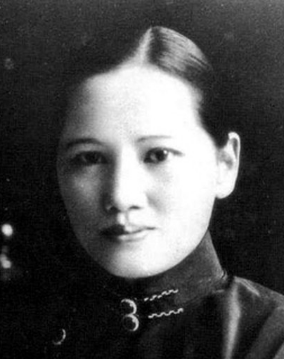
Soong Ch'ing-ling
(1893-1981) One of the leaders of the 1911 revolution that established the Republic of China. During the Chinese Civil War she broke with the mainline of the Guomindang (KMT) and supported the Communists. After the founding of the PRC, Soong served as Vice President and first female head of state of modern China. Archive
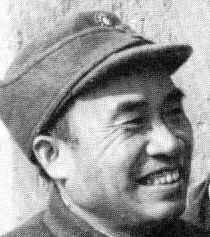
Zhu De (Chu Teh)
(1886-1976) Longtime CCP military commander, he was one of the "Ten Marshalls" of the People's Liberation Army, its commander-in-chief, and is regarded as its founder. He became so closely associated with Mao Zedong that they were sometimes collectively referred to as "Zhu Mao". Nonetheless, he was made the object of criticism during the Cultural Revolution. Archive
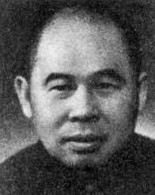
Chen Boda (Chen Po-ta)
(1904-1989) Acted as Mao's political secretary in Yenan until 1941 and was one of the initiators of the Yenan Rectification Movement. He was director of Hongqi (Red Flag), and was primarily responsible for compiling the quotations that comprise the book Quotations of Chairman Mao Tse-tung. Archive
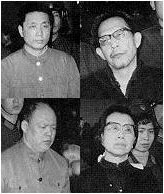
Gang of Four
(1966-1976) Led by Mao Zedong's fourth wife, Jiang Qing (1913-1991), the "Gang of Four" (Full biography) was a powerful political influence on Chinese Communism during final years of Mao's life. Jiang's political clout coalesced during the early phase of the (Great Proletarian) Cultural Revolution and she later aligned with Shanghai propaganda official Zhang Chunqiao (1913-1991), literary critic Yao Wenyuan (1931-2005 ), and security guard Wang Hongwen (1935-1992).
______________
CHINESE COMMUNISM AFTER MAO
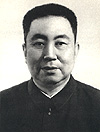 Hua Guofeng (Hua Kuo-feng)
(1921 - 2008) Succeeded Zhou Enlai as Premier after Zhou's death in 1976. Succeeded Mao Zedong as the de facto leader of China after winning a power struggle with the so-called "Gang of Four". (Full biography) Archive
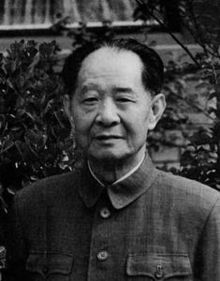 Hu Yaobang
(1915 - 1989) A leader belonging to the second generation of leadership within the People's Republic. He launched reforms in the 1980s, and for a time was viewed as the main candidate to suceed Deng Xiaoping. He lost influence following the 1986 student protests. His death was a catalyst for the 1989 Tian'anmen Square protests. Archive
The Eight Elders were a group of
longtime
members of the CCP who wielded substantial power and influence during
the 1980s and 1990s. The popular name for this group of leaders,
the "Eight Immortals", is an ironic reference to a group of
revered powerful beings (xian) known by that name in Daoist tradition. |
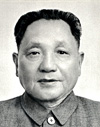
Deng Xiaoping (Teng Hsiao-ping)
(1904-1997) Veteran of wars against Kuomintang and Japanese forces. Played a prominent role in the Long March of 1949. Purged from CCP and rehabilitated twice. Deng became paramount leader of theCCP and the People's Republic a after Mao's passing, and introduced reforms which opened China's economy to market forces under the banner of "One country, two systems." (Full biography) Archive
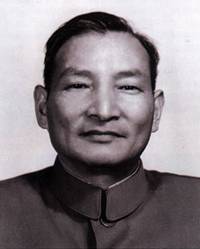 Chen Yun
(1905 - 1995) Veteran of the civil wars and of the Yunnan years, Chen Yun critical of Mao over the handling of the Great Leap Forward. He initially allied himself with Deng Xiaoping, but in time came to view his policies as too liberal. He is considered one of the architects of China's economic policies from the 1960s to the 1990s. Archive
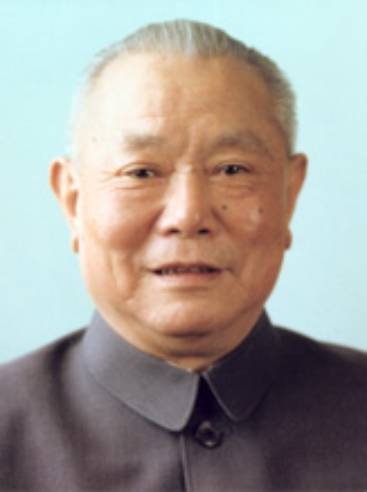 Li Xiannian (Li Hsien-nien)
(1909 – 1992) Li Xiannian was governor of Hubei Province, was lected to the CCP Politburo in 1956, and named President of the People's Republic from 1983 to 1988. He later served as Chairman of the Chinese People's Political Consultative Conference until his death. He became nationally prominent when Hua Guofeng took over the leadership of the CCP. Within China in the 1980s, his period of greatest influence, he was regarded as a prime architect of the post-Cultural Revolution economy. Archive
Peng Zhen (Peng Chen) 
(1902-1997) Veteran of the revolutionary war and a participant in the capture of
Beijing in 1948. He was a member of the Politburo and mayor of Beijing, in
addition to having held a number of other posts. In 1956 he opposed the
Great Leap Forward, for which he was expelled from the party during the Cultural
Revolution. He was rehabilitated in 1978 by Deng Xiaoping. He
retired from politics in 1988. Archive
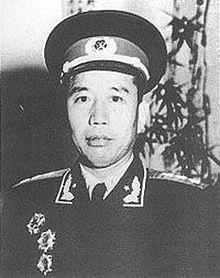 Wang Zhen
(1908-1993) A veteran of the revolutionary war, he won fame while commander of the 359th for turning the poor soils of Nanniwan into productive lands whose agricultural surpluses served to sustain other communist base areas. He served as Vice-Chairman of the National Committee of the Chinese People's Political Consultative Conference. He also served as Vice-President of the People's Republic from 1988-1993, during Yang Shankung's term as President. Archive
 Song Renqiong
(1909-2005) A veteran of the revolutionary war, he was an alternate member of the Politiburo elected by the 8th Central Committee of the CCP, secretary to the Central Secretariat of the 11th Central Committee, and full member of the the Politburo of the 12th Central Committee. He also served as Vice-Chairman of the Central Committee of the Chinese People's Political Consultative Conference. Archive
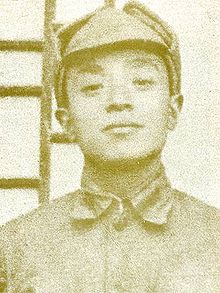 Yang Shangkun
(1907-1998) Political Commissar of the Third Army Group of the Workers’ and Peasants’ Red Army in 1932. Later, Vice-Chairman of the Standing Committee of the National People’s Congress and Vice-Chairman of the Military Commission of the Central Committee of the Communist Party of China. He served as President of the People's Republic of China from 1988 to 1993. (Biography) Archive
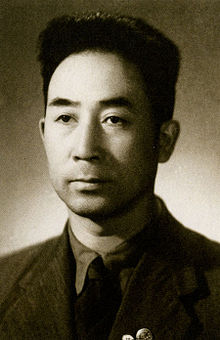 Bo Yibo
(1908-2007) Veteran of the revolutionary war. He was Minister of Finance for the People's Republic but was removed from his post during the Cultural Revolution. He was rehabilitated by Deng Xiaoping in 1978. He favored a policy of trade with Western nations. Archive
Supplemental Readings
SUPPORTERS ABROAD OF MAO AND CHINESE COMMUNISM
Albania: Enver Hoxha
India: Charu Mazumdar (CPI-ML) Vinod Mishra (CPI-ML(L)) Shibdas Ghosh (SUCI)
Vietnam: Ho Chi Minh Le Duan
Turkey: İbrahim Kaypakkaya
See also the Encyclopedia of anti-Revisionism Online
OTHER READINGS
ETOL China Documents
Frank Glass (Li Fu-jen) Archive
Harold R. Issacs The Tragedy of the Chinese Revolution (1938)
Ernst Mandel on China
The Third Chinese Revolution: I. Origin and Significance of the Victory of Mao Tse-tung
The Third Chinese Revolution: II. Nature and Perspectives of the China of Mao
Tse-Tung
L.D. Trotsky on China