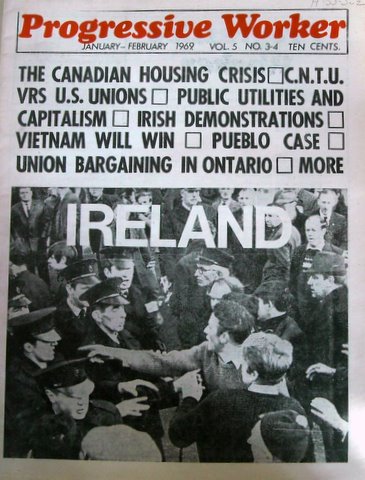
The first wave of anti-revisionist organizations in Canada were inspired by the Communist Party of China in its struggle against the Communist Party of the Soviet Union. Members of this movement saw the Chinese Communist Party led by Mao zedong as a revolutionary alternative to existing left formations such as pro-Soviet Communist Party of Canada, the social-democratic New Democratic Party, or the Trotskyist and new left organizations.
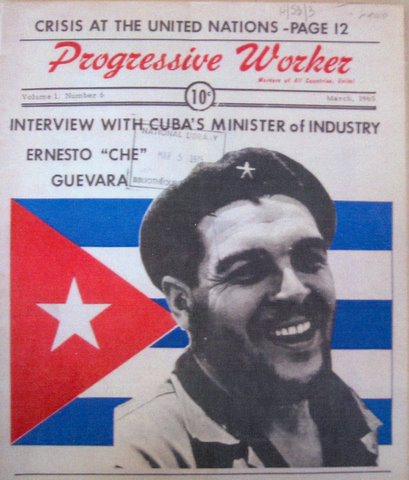
The first group to be identified with this trend was the Progressive Workers Movement (PWM) which split from the Communist Party in 1964. Other groups, such as Canadian Party of Labour (CPL) (which was associated with the Progressive Labor Party in the United States) and the Canadian Liberation Movement (CLM), would emerge from the tumult of the late 60s. The largest anti-revisionist organization during this period, however, was the Communist Party of Canada (Marxist-Leninist) (CPC (M-L)) which was formed from the Internationalists, led by Hardial Bains. Although these groups would constitute a minority in the Canadian left, they would make up for the lack of numbers by a hyper-activist approach to political activity.
During the early 1960s, Quebec emerged from the socially and politically stifling Duplessis era into a period known as the “Quiet Revolution”. This period saw the birth of the modern independence movement that viewed Quebec as a culturally and economically oppressed colony of Canada and its struggle as an anti-colonial struggle linked other anti-imperialist struggles in the world. Quebec independence movements ranged from the bourgeois nationalist Rassemblement pour l’Indépendance Nationale (Rally for National Independence) and the Parti Québécois to left movements such as the Front de Libération du Québec and the Mouvement de Liberation Populaire.
This new movement challenged the rest of the Canadian left in relation to organizing in Quebec. The first anti-revisionists decided to break with the traditional approach of organizing a single party within Canada and sought a “two-nation” solution. Groups such as PWM and CLM refused to organize in Quebec, stating that Quebec would develop its own separate struggle for independence and socialism. The Internationalists also held the same position, but decided to form a separate Quebec organization with a separate press. The exception to this position was the Canadian Party of Labour which organized on a pan-Canadian basis because of its adherence to Progressive Labor’s “all nationalism is reactionary” position.
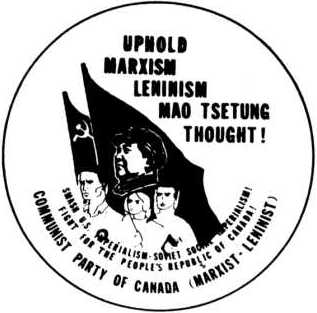
A second feature that would define this first wave of anti-revisionist groups was Canadian nationalism. Many on the Canadian left argued that high rates of U.S investment and cultural intrusion into Canada had stunted Canada’s economic and cultural development. The relationship of Canada to its southern neighbour was that of a “hinterland” to a “metropolis”. Canada was, in effect, a neo-colony of the United States. This theory was taken up the by the majority of first wave Canadian anti-revisionists and they consequently applied a two-stage theory of revolution developed by the Comintern for colonial and semi-colonial countries and by Mao, in such works as New Democracy, to Canada.
The theory held that the first stage of the revolutionary process would be an anti-imperialist struggle that would unite a broad stratum of Canadian society, including non-comprador elements of the capitalist class, against U.S imperialism. Once the anti-imperialist struggle had been won, then the second stage of the struggle, this time for socialism could be launched. The PWM, CLM, and CPC (M-L) applied this as their guiding strategy. While PWM and CPC (M-L) saw the need for a vanguard party to lead these struggles, the CLM sought to build itself as a broad-based anti-imperialist movement, rather than a party. Again, in this period, only the CPL rejected the two stage theory of revolution for Canada.
The first wave of Canadian anti-revisionists hit their peak in the early 1970s and then stagnated or diminished in size before disappearing. Only the CPC (M-L) has survived to this day. The remaining pool of activists in English Canada that might have been potential recruits for anti-revisionism were not won to the neo-colony perspective. These wayward cadres would make up the bulk of the second wave of Canadian anti-revisionists.
| Index of organizations in this section (by alphabetical order) |
| Canadian Liberation Movement |
| Canadian Party of Labour |
| Communist Party of Canada (Marxist-Leninist) |
| Indian Progressive Study Group |
| Progressive Workers’ Movement |
From the Canadian Tribune (via our readers): Three Letters in Defense of Stalin
A Brief history of the Struggle for the Reconstruction of a Proletarian Party in Canada by In Struggle!
Red Power and Socialist Study: 1967–1975 by Ray Bobb
The Progressive Workers’ Movement (PWM) was formed in 1964 as a split from the Communist Party of Canada by members who supported China’s position against the Communist Party of the Soviet Union. PWM was led by Jack Scott, a CP member since the 1930s and a BC/NWT labour organizer. Scott and other PWM members created the Canada-China Friendship Association–the first China friendship society in North America or Europe. Scott is the only Canadian anti-revisionist to have met Chairman Mao zedong.
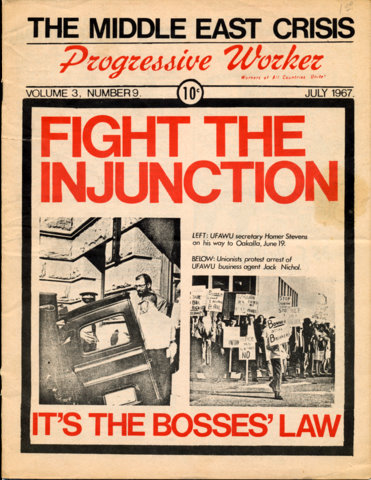
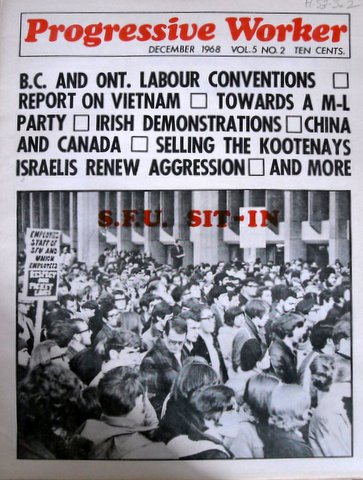
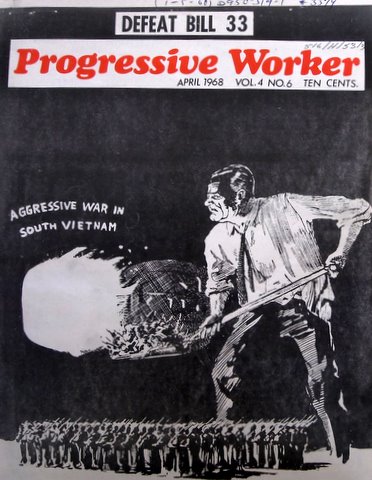
The bulk of PWM’s membership was in Vancouver where it carried out most of its activities and published its monthly magazine Progressive Worker and the mimeographed B.C. Newsletter. During the mid-1960s, it tried to expand into Ontario and unite with other activists into a new Marxist-Leninist party, but this ended in failure. A similar attempt in the late-1960s would also prove unsuccessful. In the 1965 federal election, the PWM ran a candidate in the Vancouver East riding and got 275 votes. Other PWM members were active in the Vancouver District Labour Council.
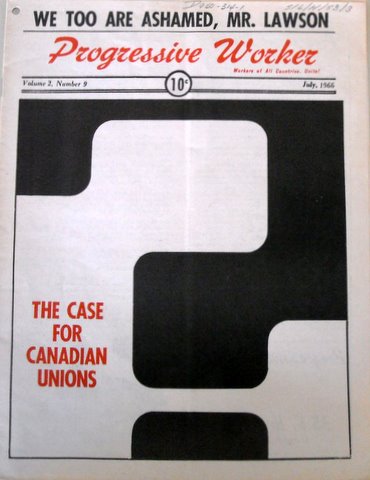
The PWM held that the Canadian economy was dominated by U.S. imperialism and that the struggle of the working class should be directed at breaking the domination of the United States over the Canadian economy. In keeping with this position, a key PWM activity was promoting independent Canadian unions against the international unions in the Canadian Labour Congress. The PWM also held the position that Quebec, being a separate nation, would develop its own struggle for socialism and took a “hands-off” attitude towards recruiting members in Quebec.
The PWM dissolved in 1970. Some members went on to form a short-lived, progressive community newspaper named New Leaf. Scott and other members went on to form the Vancouver Study Group which later became the Red Star Collective (RSC). The RSC was active the Vancouver area during the 1970s and continued to hold the position that Canada was a neo-colony of the U.S. This brought it into conflict with the newer Marxist-Leninist groups which held that Canada was fully developed capitalist economy that had reached the stage of imperialism. Initially RSC willingly debated with these groups and participated in three National Conferences of Marxist-Leninists organized by In Struggle!. However, relations became strained as polemics became more intense and in 1978, the RSC announced that it was boycotting the fourth National Conference of Marxist-Leninists. The RSC also supported the “Theory of Three Worlds” and the new Chinese leadership that took control after Mao’s death. Scott, however, denounced the Chinese Communist Party during the 1980s as it became more reactionary.
During the 1970s, Scott was the author of a number of books on Canadian labour history. He died at age 90 in 2000.
In the Canadian CP: Ranks Stirred by Sino-Soviet Conflict by Harry Anderson [World Outlook, April 24, 1964]
Speech at the 1976 National Conference on the Unity of Canadian Marxist-Leninists [On the Progressive Workers Movement and its Origins] by Jack Scott
A Communist Life: Jack Scott and the Canadian Workers Movement, 1927-1985 by Bryan Palmer
“On the Progressive Worker Movement” by Jack Scott [from Bryan Palmer’s A Communist Life: Jack Scott and the Canadian Workers Movement, 1927-1985]
Jack Scott: A Revolutionary Life by Bryan Palmer ((with notes from Al Birnie and Ralph Stanton)
Jack Scott Memorial (a video in two parts first broadcast on January 19, 2001)
The Canadian Maoists “Analyze” the Cuban Revolution by Phil Courneyeur [World Outlook, April 29, 1968]
Rise and Decline of Maoism in Canada by Ron Haywood
The Progressive Workers’ Movement and the Red Star Collective: A Legacy Of Economism And Bourgeois Nationalism In The Marxist-Leninist Movement by the Long March Collective
Letter To Canadian Comrades by Milt Rosen
Statement by Quebec Marxist-Leninists by Antonio Villeneuve
Who are the real splitters? by J. LeBourdais
Progressive Workers’ Movement Election Statement [1965]
The Curse of Revisionism by Cathal Brugha
Reflections on the Elections by Malcolm Bruce
Marxists and Players by Don Duggan
Canadian Workers Demand Canadian Unions
Cuba and Revisionism in Latin America by Barry Lord
China’s Great Proletarian Cultural Revolution Consolidates the Dictatorship of the Proletariat by Jack Scott [Peking Review, #37, September 8, 1967]
China's Great Proletarian Cultural Revolution Is the Most Thoroughgoing and Fundamental Revolution [Peking Review, #48, November 24, 1967]
On the Question of Liu Shao-chi
C.P.U.S.A. (M.-L.)-Progressive Workers Movement Communiqué
For An Independent and Socialist Canada: A Marxist-Leninist View
[Back to top]
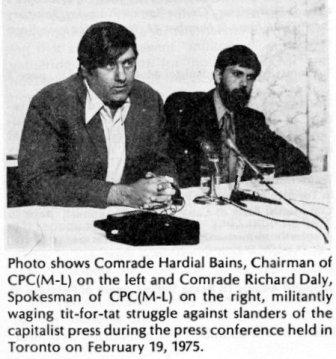
The Communist Party of Canada (Marxist-Leninist) traces its origins to the Internationalists, a progressive group founded at University of British Columbia in 1963. Among its founders was a microbiology student from India, Hardial Bains, who supported the Chinese Communist Party against the CPSU.
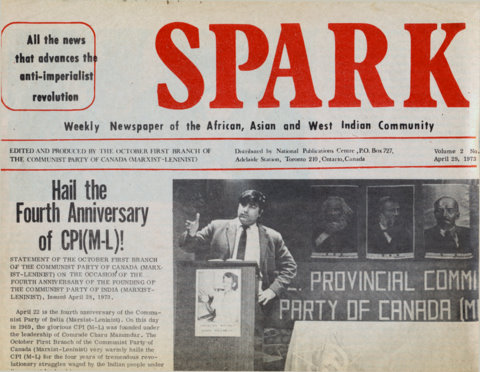
Bains would re-form the Internationalists as a Marxist-Leninist organization in 1968 after returning from a teaching position in Ireland where he had created Internationalist groups there and in the UK. The Internationalists renamed themselves the Canadian Student Movement and then the Canadian Communist Movement (Marxist-Leninist). In 1970, the CCM (M-L) reconstituted itself as the Communist Party of Canada (Marxist-Leninist). Shortly afterwards, the allied Les Intellectuels et Ouvriers Patriotes du Quebec–Mouvement Communiste Quebecois (marxiste-leniniste) formed the Parti communiste du Québec (marxiste léniniste).
Internationalist groups in England and Ireland would go on to form the Communist Party of England (Marxist-Leninist) and Communist Party of Ireland (Marxist-Leninist) respectively. A U.S group, the American Communist Workers Movement (Marxist-Leninist) was formed in 1969. During the 1970s, the National Liberation Movement of Trinidad and Tobago (which later became the Communist Party of Trinidad and Tobago) was also created. Bains also formed the Hindustani Ghadar Party – Organization of Indian Marxist-Leninists Abroad which led to the formation of the Communist Ghadar Party of India in 1980. These organizations and parties often adopted slogans and campaigns from the Canadian party regardless of national conditions. This broke with the usual practice of anti-revisionist and Maoist groups which respected national autonomy.
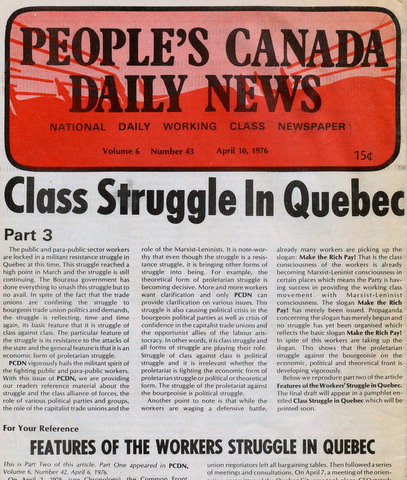
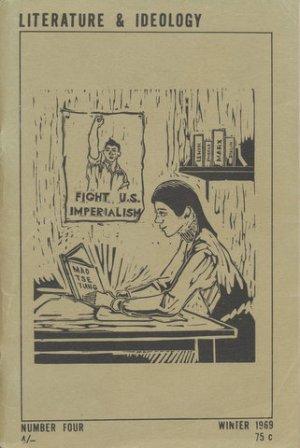
The CPC (M-L) and its sister party in Quebec were the largest anti-revisionist grouping in Canada from 1969 to 1975, with activities in most cities and towns and would remain the largest group in English Canada. The party printed a large number of newspapers and journals; these would often exist for only a few issues before disappearing. However, Mass Line and People’s Canada Daily News were published on a regular basis. The PCQ (M-L) also published the weekly, Patriote Rouge. To attract cultural workers, in 1969 the CPC (M-L) launched the journal Literature & Ideology which covered art, literature, and culture from the perspective of Marxism-Leninism-Mao Tsetung Thought.
Like the Progressive Workers Movement, the CPC (M-L) defined Canada as a neo-colony of the United States and that the primary struggle of the Canadian working class was against U.S Imperialism. It wavered between calling for a two-stage revolution – with a “peoples’ democratic dictatorship” being established (along with “patriotic” capitalists) prior to moving to socialism – and calling for outright socialist revolution.
Because of the upsurge of left nationalism in Quebec, two separate parties were maintained until 1974 when the PCQ (M-L) was folded into the CPC (M-L). The Quebec party defined a twin struggle against “Anglo-Canadian colonialism” and U.S. imperialism. During the October Crisis in 1970, a number of PCQ (M-L) members were arrested under the War Measures Act. In 1971, The PCQ (M-L) suffered significant split with a large chunk of its membership forming the short-lived Mouvement révolutionnaire ouvrier. Student members also split to form the Mouvement révolutionnaire des étudiants du Québec. At the same time, foreign student supporters at Montreal’s English-language universities split to form the Afro-Asian Latin American Peoples’ Solidarity Committee.
During the early seventies, both the CPC (M-L) and the PCQ (M-L) engaged in many violent confrontations with police which led to the arrests of many members (CPC (M-L) put the number of arrests between 1969-1974 at over 1,000). In the mid to later part of the seventies, confrontations with police dropped off significantly. However, both groups still engaged in violent attacks against left-wing competitors. Despite its extreme sectarianism, the CPC (ML) did manage to absorb the Partisan Organization in Vancouver and the New Morning Collective in Nova Scotia. Other groups and publications – such as Alive magazine in Guelph and On The Line in Kitchener-Waterloo – did briefly align themselves with CPC (M-L), but such collaboration was short-lived with splits from the party soon afterward. CPC (M-L) never maintained a consistent policy on trade union work, but members have been elected to union positions. Since 1972, the party has run candidates in federal elections under the name Marxist-Leninist Party of Canada. It has run more candidates than any other left groups (including the pro-Soviet CP) with the largest number in 1980, when it ran in 177 ridings.
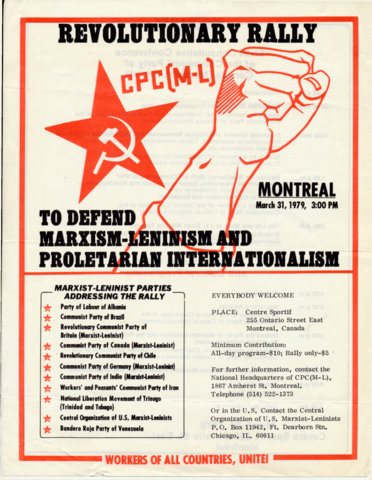
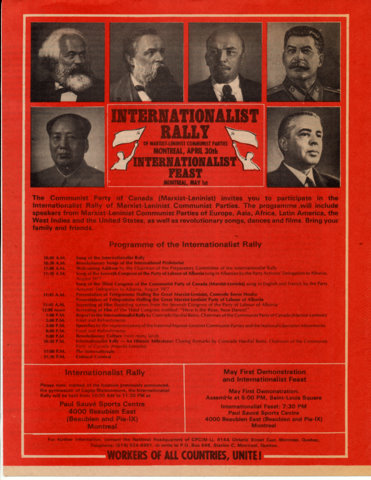
The CPC (M-L) stood out among the Canadian left because of its slavish devotion to China and Mao zedong – with slogans such as China’s path is our path” and “China’s chairman is our chairman.” Its publications were seen by many to be a copy of the writing style of Peking Review. However, by 1976, CPC (M-L) began to support the criticisms of Chinese foreign policy and the “Theory of Three Worlds” made by the Party of Labour of Albania and, by 1977, declared that China had degenerated into revisionism and later, that Mao zedong was not a Marxist-Leninist. Albania recognized CPC (M-L) as the vanguard party in Canada and delegations would make many visits to Albania prior to the collapse of the PLA. In 1978, the CPC (M-L) would hold a large international rally – popular with pro-Albania parties at the time – in Montreal that included a delegation from the PLA.
After the collapse of Party of Labour of Albania, CPC (M-L) declared that there were no more foreign models. It now supports Cuba, but without the same fervor with which it had supported China. It is still active in a number of unions and still runs candidates in federal elections.
The international groups that were allied with Bains and the CPC (M-L) diminished during the 1980s. The American group split with the CPC (M-L) in 1980 shortly before forming the Marxist-Leninist Party of the United States. The parties in Trinidad/Tobago and in Ireland dissolved in the 1980s and 2003 respectively. The British party – now renamed the Revolutionary Communist Party of Britain (Marxist-Leninist) – and the Communist Ghadar Party of India continue to exist and are still allied to CPC (ML)
Hardial Bains died in August 1997. The party is today led by his widow, Sandra Smith. It produces an on-line paper, The Marxist-Leninist Daily.
Words [Published by the Irish Internationalists, 1967]
Necessity for Change! by Hardial Bains
Our Founder. Our Leader. Hardial Bains, August 15, 1939 – August 24, 1997
Memorial Service for Comrade Hardial Bains
Eulogy: Oh Comrade, Dear Comrade, Our Beloved Comrade!
What Kind of Party? by Hardial Bains
What It Means to Be Pro-Active. What It Means to Be Reactive. Conversations with Hardial Bains
The CPC(ML): A Revisionist Organization of Agent-Provocateurs by In Struggle!
Canadian Maoists – Agents of Imperialism by William Stewart
Canadian Revisionists’ Shameless Self-exposure by the Communist Party of Canada (Marxist-Leninist)
A Reply to CPC (ML)’s Call for Unity by Dave Paterson
Six of One, Half a Dozen of Some Other by John Burnley [Alive magazine]
Fascist Bains gang tries to buy off worker by the Canadian Communist League (Marxist-Leninist)
The Destruction of On the line by Cathie Lauzon
Hardial Bains and his so-called “Communist Party of Canada (Marxist-Leninist)” by the Bolshevik Union
Bolshevik Union and the opportunist Hardial Bains have a lot in common by the Regroupement des ex-militants du PCC(m-l)
6th Consultative conference of the CPC(M-L). A hoax and sabotage by In Struggle!
Waitress, My Hot Pecan Pie Is Cold by George Steffler
Chronology of Events: 1975-1981 by the Marxist-Leninist Party
An ugly result of the liquidationist and Maoist deviations of the leadership of the Communist Party of Canada (ML) (part 1) by the Marxist-Leninist Party of the USA
An ugly result of the liquidationist and Maoist deviations of the leadership of the Communist Party of Canada (ML) (part 2) by the Marxist-Leninist Party of the USA
Once again on Canadian imperialism and the Maoist deviation of the leadership of the CP of Canada (M-L) by the Marxist-Leninist Party of the USA
Reference Material on CPC(M-L)’s Nationalist Strategy (1969-1982) by the Marxist-Leninist Party of the USA
On the 20th anniversary of the Internationalists: The Myth of the Glorious Past–CPC(M-L)’s Pretext for International Factionalism by the Marxist-Leninist Party of the U.S.A.
Canadian Liquidators Praise New Zealand’s Social-Democratic Government [from the Workers’ Advocate Supplement, published by the Marxist-Leninist Party of the USA]
Canadian Communist Movement (Marxist-Leninist) Founded
Press Communiqué [Formation of the Communist Party of Canada (Marxist-Leninist)]
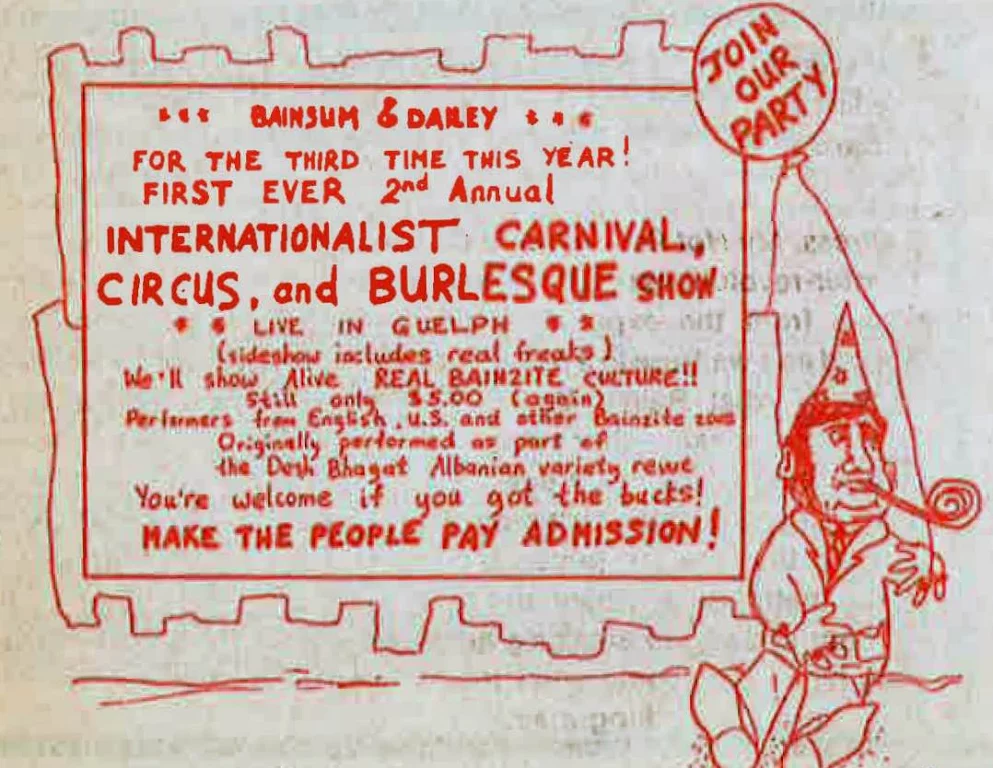
Political Report of the Communist Party of Canada (Marxist-Leninist) (April 1970)
22nd Congress of the CPC(ML) Concluded in Great Revolutionary Atmosphere of Determination!
Constitution of the Communist Party of Canada (Marxist-Leninist)
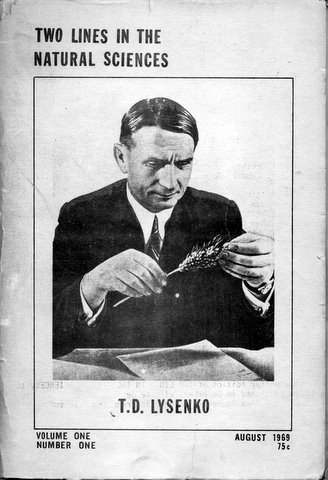
Enver Hoxha Bookstore [brochure]
Special congress of CPC(M-L) held in victory for the Marxist-Leninist line
Report to the Internationalist Rally, Montreal [1990] by Hardial Bains [from The Marxist-Leninist Journal, theoretical journal of the Revolutionary Communist Party of Britain (M-L), Vol. 3, No. 2, July 1990]
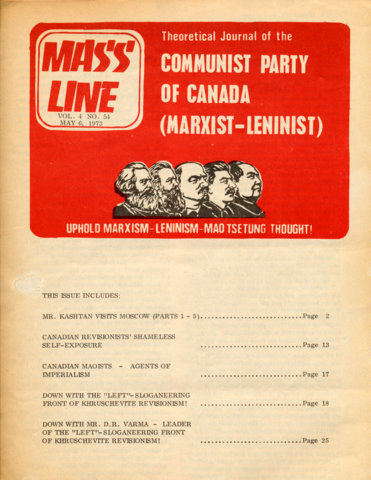
Get organized for national war against U.S.imperialism
To oppose U.S. imperialism is an honour not a crime!
Amchitka – focal point of struggle
CPUF releases two important petitions
The necessity for economic analysis
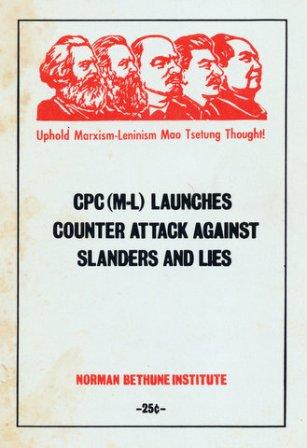
Comrade Jack Scott warmly supports National Petition For People’s Canada
“Down with bourgeois hang-ups” study group
The root of “left” and rightist errors is in methods of work
26 CPC(M-L) members and supporters tried for resisting police and nazis
British Columbia Labour Code Bill 11 by Hardial Bains
Statement of the Communist Party of Canada (Marxist-Leninist) released on November, 1975
Lies and slanders won’t crush the just struggle of the native people
Another cowardly and fascist attack on Comrade Hardial Bains and the party!
The Anglo-Canadian state and the “two nations” theory
Frame-up against CPC(M-L) further exposed!
Trumped-up charges against comrade Bains dismissed: Another attempt to frame-up comrade Bains fails
February 23, 1977 RCMP raid on CPC (M-L) and its aftermath – a partial chronology of events
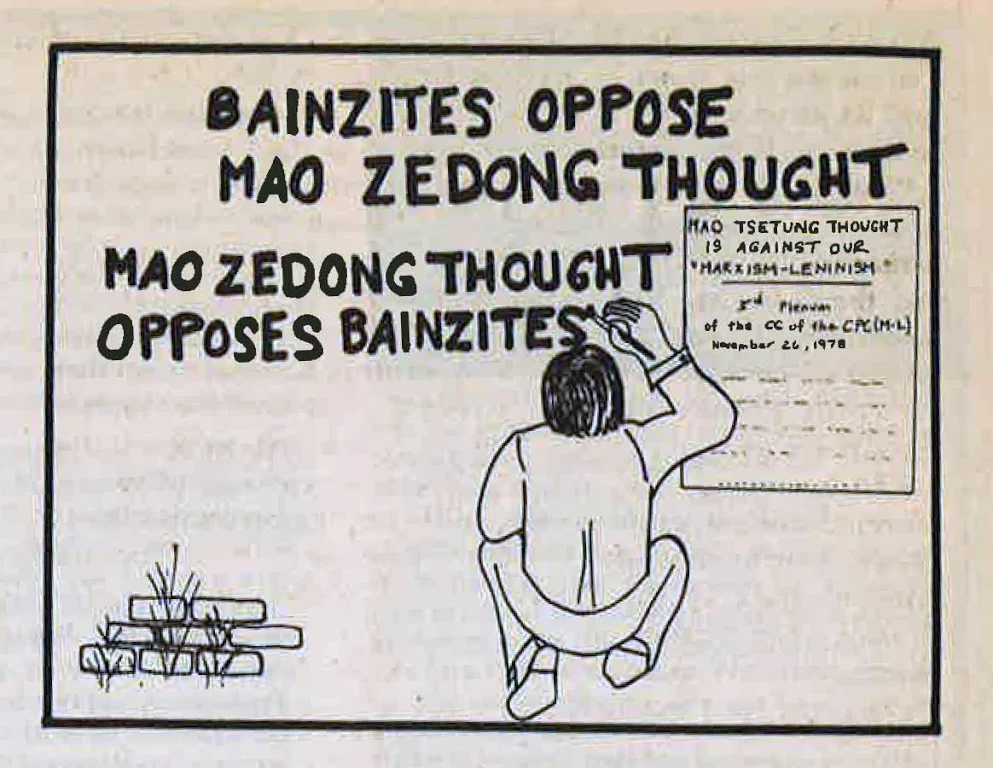
Press Communiqué [Formation of the Communist Party of Quebec (Marxist-Leninist)]
National petition for a people’s Quebec
No to the reactionary cultural nationalism of the PQ!
The PQ is calling up the ghosts of reactionary cultural nationalism
Only the proletariat can win genuine national liberation of Quebec
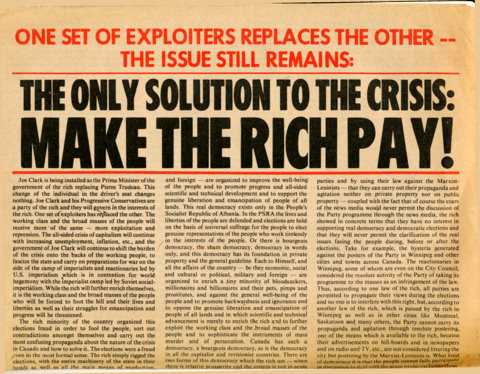
The role of Afro-Asians in the Canadian people’s struggle against US imperialism
First annual national convention of the EIDC
Fight state-organised racist attacks through revolutionary struggle! by Hardial Bains
Peoples Canada Daily News series on the Indian People’s Association in North America (IPANA)
CPC (M-L) Announces its Candidates for the 1972 Federal Election
Comrades, never forget class struggle!
Analysis of elections by Joseph Redpath
Programme of the Marxist-Leninist Party of Canada
Election Issue of People’s Canada Daily News [February 16, 1980]
Election Issue of People’s Canada Daily News [February 18, 1980]
Tasks of the Revolutionary Students, Canadian Internationalist, Vol. 1, No. 1, January 1969
Resolution Passed by the First Meeting of the Preparatory Committee of the First International Congress of Marxist-Leninist Youth [January 3, 1969]
World Revolutionary Youth magazine, May 1969 issue
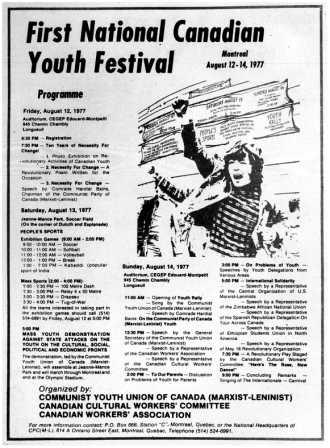
North American Conference of Anti-imperialist Youth [Regina Conference] Flyer
Regina Conference, An Historic Turning Point in Party-building in North America
Report on North American Anti-Imperialist Conference
Wage War of Annihilation on the Cultural Front!
Haitian student ordered expelled and is given one week one week to leave Canada
Canadian youth are getting organized
Anti-Imperialist Alliance courageously counters fascist attacks
Free speech and the Chevron affair by Spartacist Canada
Documents of the Ninth Annual Conference of the Canadian Student Movement, March 11-19, 1978
How the young pioneers ushered in the year of Stalin
Dylan is dead, while George Jackson lives!
Two Articles Against Soviet Social Imperialist Cuban Intervention in Angola by Hardial Bains
What kind of friendship? by Hardial Bains
Support the Second Anti-Colonial Struggle of the Angolan People
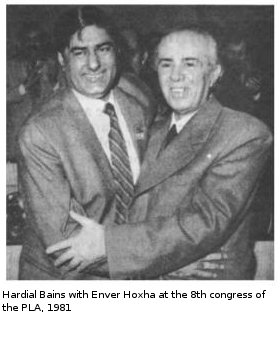
Maoists front for Angolan anti-communists: Stop CPC(M-L) goon attacks by Spartacist Canada
What are the issues involved in class struggle in China?
The commemoration of the first anniversary of the passing away of Chairman Mao Tsetung
Hold high the bright red banner of Marxism-Leninism and proletarian internationalism!
All-sided relations between Canadian and Albanian people growing irresistibly
The Internationalist Rally – Montreal, April 30th!
Historic Internationalist Rally Held in Montreal
The Party of Labour of Albania greets the Internationalist Rally
Internationalist Feast held in Montreal
Albania is an example of courage, wisdom and persistance on the road to socialist revolution and socialist construction [Excerpts from a paper delivered in Tirana, Albania by Hardial Bains]
Sixth Consultative Conference of CPC(M-L) Opens Amidst Great Revolutionary Spirit! [including a message from a delegation of the Party of Labour of Albania]
The Marxist-Leninist magazine, April 14, 1985 [on the death of Enver Hoxha]
Clean the reactionaries and police agents out of the ranks of the people!
Down with bourgeois plots and mystifications!
Learn from the Teachers by Negative Example by Charles Boylan
Mao Tsetung Thought – the Marxism-Leninism of our era
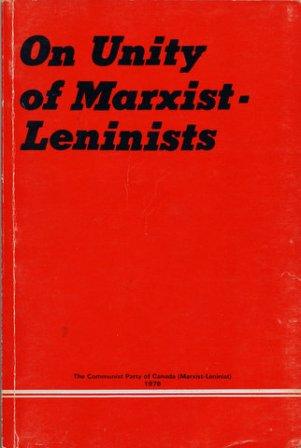
On Unity of Marxist-Leninists, Part One by Robert Alexander
What Is the Issue? by Hardial Bains
Marxism-Leninism and proletarian internationalism is the only basis for unity and victory
Down with the non-aligned “Marxist-Leninist” movement
People’s Canada Daily News – Early Issues [1970]
Canadian Student, Vol. 4, No. 2, February 24, 1971
The Voice of the Youth, Vol. 1, No. 1, June 1979
The Marxist-Leninist, Vol. 15, No. 32, April 14, 1985
The Party is the Most Precious Thing–Record Album video
* * *
Herbert Marcuse: The Ideologue as Paid Agent of U.S. Imperialism by Eric Scheper
Fascist Ideology of the Self: Mailer, Rubin and Hoffman by Armand Barotti
Eldridge Cleaver the Counter-Revolutionary by Mary Ellen Brooks
Literature for an Independent Canada by J. Wilson Clark
Consolidation of Alive Magazine and Literature & Ideology Will Serve to Concentrate Struggle in the Cultural Superstructure by Alive Magazine: Literature & Ideology
Notes on the relations of Alive magazine and Literature and Ideology
Draft summation of the work of Literature and Ideology by James Reid
[Back to top]
The Indian Progressive Study Group was a Toronto-based group of Indian students and activists living in Canada. It was closely associated with the Communist Party of Canada (Marxist-Leninist).
Gandhi-Nehru-Indira: Heroes or Traitors of the People? [flyer]
Unite and support the armed agrarian revolution of the Indian masses [flyer]
Indian Progressive Study Group. Bulletin #7
IPSG Meeting on: International Significance of Naxalbari [flyer]
IPSG Meeting on: The Role of Three Classes in the Indian Revolution [flyer]
IPSG Meeting on: Does Political Power Grow Out of the Barrel of A Gun? [flyer]
I.P.S.G. Opposes Political Deportations
IPSG Special News Release 14 September 1972
IPSG Meeting on: Unite, Uphold Principle; Denounce Slanderers and Desrupters [flyer]
IPSG Meeting on: Federal Elections and National Minorities [flyer]
Indira Gandhi’s Fascism Cannot Stop the Indian Revolution
IPSG Meeting on: Unite to Oppose Racist Attacks [flyer]
IPSG Meeting on: The Peasant Movement in the Terai Region [flyer]
IPSG Meeting on: The Struggle Between Two Lines in the Party [flyer]
[Back to top]
The Canadian Party of Labour (CPL) was formed in 1969 and was active mostly in Southern Ontario, but also in British Columbia and Quebec. CPL was inspired by the politics of the Progressive Labor Party in the US and adopted many of its political campaigns to Canada. This included initiating Students for Democratic Society in Canada. This version of SDS was based on the Workers-Student Alliance concept advanced by Progressive Labor after the 1969 split within SDS in the US. CPL also organized anti-racism campaigns through the International Committee against Racism.
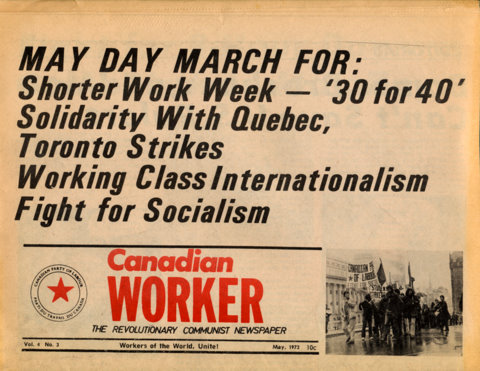
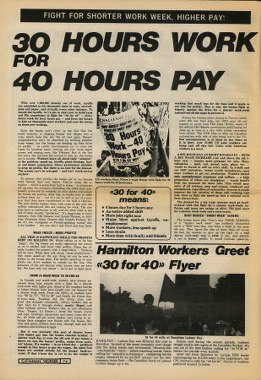
CPL was also active in numerous unions, including in the Canadian Union of Postal Workers and the United Steelworkers. A CPL member was elected president of the Steelworkers local at the Inglis appliance plant in Toronto. The main workplace demand of CPL was “ thirty hours work for forty hours pay.”
The CPL supported the position of the Progressive Labor Party that “all nationalism is reactionary.” This made it an anomaly in the Canadian anti-revisionist left during the early seventies, as it was the only group that rejected the “dependency” theories popular in Canada and Quebec at the time.
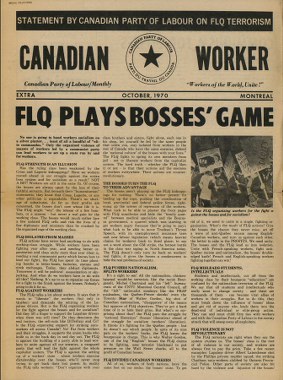
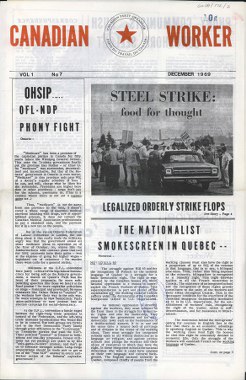
CPL published the monthly paper Canadian Worker and L’Ouvrier. Canadian Worker went to a twice-monthly basis in the early 1970s. In 1974, the English-language paper was renamed The Worker and both the English- and French-language versions were later published as weeklies. In the mid-seventies CPL also published Greek, Italian and Portuguese supplements to the paper.
Like Progressive Labor, the CPL initially supported China, but denounced it at the same time that PL did. In 1978, the CPL broke with PL over the issue of Quebec and became a strident supporter of Quebec nationalism and national liberation struggles and groups in other countries, including Khomeini’s Iran and the Provisional IRA. It also declared support for Albania’s critique of China and Mao while PL refused to recognize the Albanian as a authentic Marxist-Leninist party.
After years of diminishing membership and influence, the CPL dissolved in 1984.
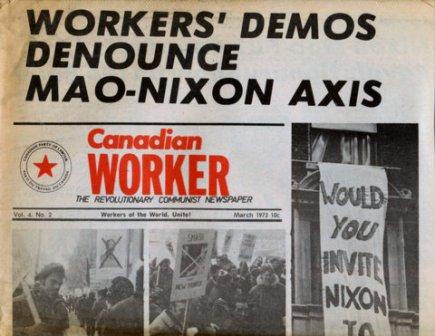
The Maoist Canadian Party of Labour [Intercontinental Press, March 9, 1970]
Maoists Assault Trotskyist Leader [Intercontinental Press, March 29, 1971]
Bury Trudeau with anti-racism and revolution: Raise red flag over Quebec and all of Canada by the Progressive Labor Party, USA
CPL vs PL: Biting the hand that rocked the cradle by Spartacist Canada
Can’t fight racism with nationalism: Nationalism equals capitalism by the Progressive Labor Party, USA
CPL: From Stalin to Allah by Spartacist Canada
The CPL accuses IN STRUGGLE! of chauvinism by In Struggle!
Quebec nationalism progressive, says Canadian Party of Labour by In Struggle!
The CPL has never broken with revisionism by In Struggle!
Defeat petty-bourgeois nationalism
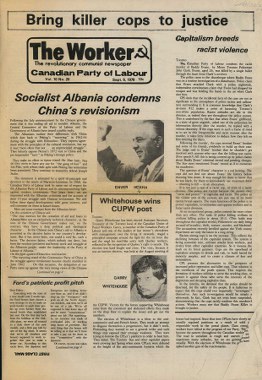
Editorial: ’Independent Marxism’ is dependent revisionism
Revisionism and student struggle
Pamphlet exposes rotten education in Montreal
The student movement and class politics
CPL hails anniversary of People’s China
The nationalist smokescreen in Quebec
Self-interest in Canadian ’liberation’
Gordon to Watkins to You: Straight from the boss’s mouth
Terrorists whip up anti-communism for bosses
Steel Strike, Hamilton, 1946 Ken Stone
New York: a big “YES” for internationalism
Laxer and Levesque: Nationalists unite
Editorial: United proletarians will crush “national leaders”
Canadian Worker Editorial: Mao Betrays Revolution
30 hours work for 40 hours pay
Workers welcome Italian language communist newspaper
China News Agency praises Trudeau, Sharp
Editorial: Nixon-Mao Put Counter-Revolutionary Show on the Road
Gagnon & Vallieres: Rats from a sinking ship
Editorial: Bombs, Brezhnev, and Mao Can’t Save U.S. Rulers
Waffle conference debates: “Stay in” or “stick around”
Laxer, Watkins flop as red-baiters
Laxer, Watkins set course for national socialist Canada
Buck passes... Nationalism lives in CP of Canada
CPL Report to International Workshop [at the Third Convention of the U.S. Progressive Labor Party]
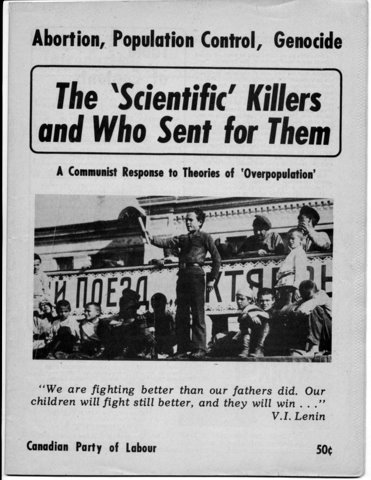
Abortion, Population Control, Genocide: The ’Scientific’ Killers and Who Sent for Them
Canadian Party of Labour Handbook
Memories of Building the UAW J.S. Napier
New Years’ Statement of CPL: Party on a Revolutionary Course
Class versus Class in Quebec [from the U.S. Progressive Labor Party’s Challenge]
For A New International Communist Movement [from the U.S. Progressive Labor Party’s Challenge]
’Hasten the Coming Socialist Revolution’ [from the U.S. Progressive Labor Party’s Challenge]
International Greetings on May Day from the Progressive Labor Party to the Canadian Party of Labour
Maoist muffs critique of Russian capitalism
Fight for Quebec’s right to self-determination
Lenin’s road to revolution: Support Quebec’s right to self-determination
Minutes of Toronto Cell Leaders’ Meeting, August 13, 1978 [including “PL’s Abandonment of Leninism”]
Leninist principles guide CPL’s work
PLP: Liberals with baseball bats
Mourn for him, boys PLP-LP rewrites Joe Hill
Draft theses on Quebec and the national question
Fake reds bait Quebec on language bill
Class analysis of the Quebec language bill
Mao Tse-tung revisionist theories
Concerning the road to revolution
Concerning PL’s erroneous line: Peasants and socialism
Road to Reaction III: Ignorant and opportunist attack on Stalin
Road to Reaction III (comments on PLP line): Getting Lenin straight
Concerning the road the revolution: PL at sea in anarchy
* * *
Cops are tops with In Struggle
CPL analysis: Paul Sauvé rally – portent for Quebec
[Back to top]
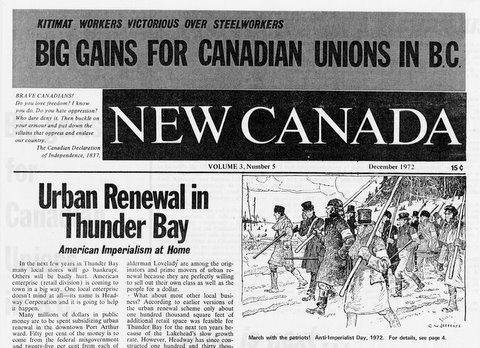
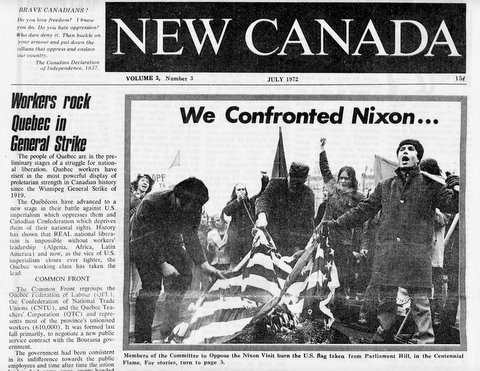
The Canadian Liberation Movement was founded by members of the “Canadians for the National Liberation Front” who wanted to build a broad-based anti-imperialist movement as a precursor to a new communist party. The group was centred in Ontario, although it also had a branch in British Columbia. It published the monthly newspaper New Canada and maintained a successful publishing house, NC Press. NC Press was a major distributor of periodicals from China and published its own titles such as a translation of Léandre Bergeron’s The History of Quebec, a Patriot’s Handbook and poetry by award-winning poet (and CLM member), Milton Acorn.
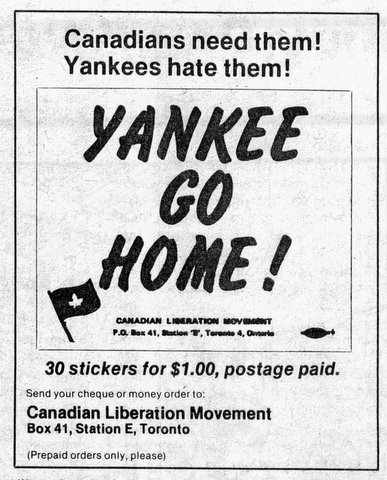
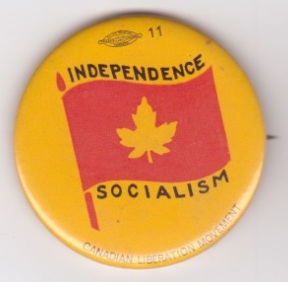
The CLM was the most ardent supporter of the “Canada as neo-colony” position. Following this position, the CLM argued for a two-stage revolution with the first stage being a national liberation struggle against U.S imperialism in a front that would also include patriotic capitalists. The second stage would be a socialist revolution. While CLM never declared itself as a Marxist-Leninst group, it was open in its support of China and maintained a semi-secret group called the Marxist-Leninist Caucus. This group often determined policy for the group bypassing the regular membership. Most of its work was centred on two campaigns: an 85 percent quota for Canadian teaching staff in universities, and Canadian unions for Canadian workers. Later it initiated a “Yankee Go Home” campaign.
The CLM was also active in a struggle against lead poisoning by the Canada Metal plant in East Toronto and attempted to form the Canadian Workers Union (CWU) as an alternative to existing unions. The CWU did manage to get certified at a golf course near Hamilton and NC Press.
The membership of the organization rebelled against the CLM’s leadership and the Marxist-Leninist Caucus in 1975. Members accused the leadership of being abusive and un-democratic. The leadership was expelled and the CLM dissolved in early 1976. The former leadership of CLM attempted to recreate New Canada on an openly communist basis. However, this never got off the ground. NC Press continued into the 1980s as an independent commercial publishing house.
The Origin of the Canadian Liberation Movement by Terry Barker
Liberationism Attacks America’s Domination of Canada’s Universities
Maoist Performativities: Milton Acorn and the Canadian Liberation Movement by Alan Filewod
More Poems for People by Milton Acorn
Self-interest in Canadian ’liberation’ by the Canadian Party of Labour
CLM’s National Chauvinist Body Dead. Let’s Bury the Opportunist Spirit! by Alive magazine
Dealing with the question: Should We Retract Our Characterization of Milton Acorn by Alive magazine
One Step Backwards, Two Steps Backwards: A Critique of the Canadian Liberation Movement by “Harry”
Canadian Liberation Movement Fundraising Appeal
Canadian Unions for Canadian Workers! [flyer]
Canadian Workers Union Founding Congress June 8, 9
Canadian Workers Union wins first victory!
Anti-Imperialist Day 1974, Ottawa
Yankee Go Home! Statement of the Canadian Liberation Movement
[Back to top]